
What to Do in the First 24 Hours After Water Damage
The first day after a leak, burst pipe, or flood is the most important window for limiting long-term damage. What you do, and how quickly you do it, has a direct effect on whether you're dealing with a straightforward dry-out or a much larger repair involving mold and structural damage.
1. Make Sure It's Safe Before You Do Anything Else
Before you touch anything, think about safety. If water is near electrical outlets, panels, or appliances, avoid the area and shut off power to that section at the breaker if you can do so without stepping into water. Be cautious on wet flooring, which can be slippery, and watch for ceiling sagging or bulging, which can signal a collapse risk from water-saturated drywall above.
2. Stop the Source of the Water
If the water is from a plumbing failure, shut off the main water valve or the individual fixture valve feeding the leak. If it's from a roof leak or storm intrusion, do what you safely can to reduce further water entry, such as placing a container to catch a ceiling drip, but don't get on a roof or attempt repairs in bad weather.
3. Document the Damage Before You Move Anything
Take photos and, ideally, video of the affected areas, the source of the water if visible, and any damaged belongings before you start cleanup. This documentation is important for your insurance claim, and it's much harder to reconstruct after items have been moved, discarded, or dried out. Keep a written note of the date and approximate time you discovered the damage.
4. Remove Standing Water and Wet Items Where You Can
If it's safe to do so, remove standing water with towels, a wet/dry vacuum, or mops, and move furniture, rugs, and belongings off wet flooring. Wet upholstered furniture, cardboard boxes, and paper goods should be moved right away since they wick moisture and can become a mold source quickly. Elevate furniture legs on foil or blocks if you can't move pieces entirely.
5. Increase Air Circulation and Reduce Humidity
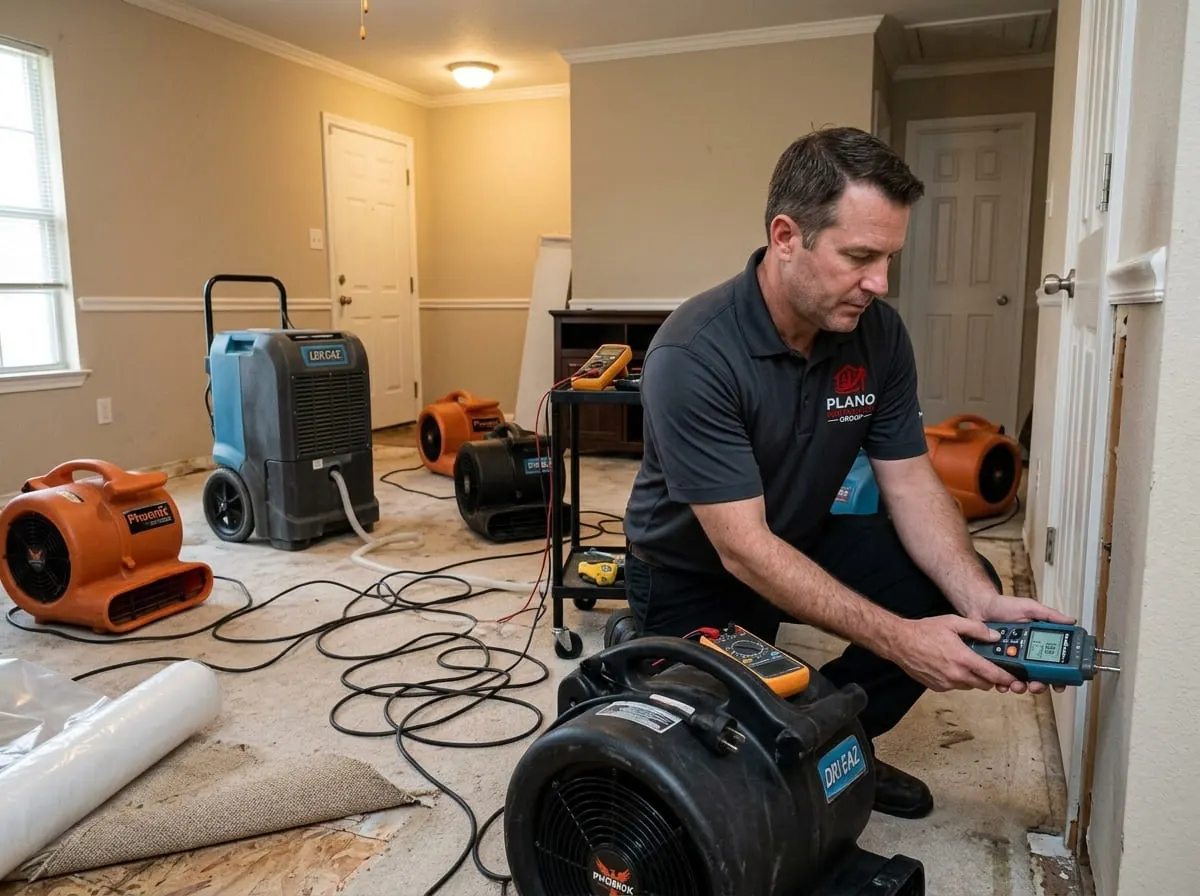
Open windows if the outdoor humidity is lower than indoors, and run fans and a dehumidifier if you have them, to start moving air across wet surfaces. This won't fully dry out saturated materials like soaked drywall or subflooring, but it helps slow the progression toward mold growth while you arrange for a full assessment.
6. Call Your Insurance Company and a Restoration Professional
Contact your insurance provider to start the claims process and ask what documentation they require. Separately, get a professional assessment as soon as possible. Materials that look dry on the surface can still be saturated underneath, and moisture meters and thermal imaging are typically needed to confirm how far water has traveled behind walls, under flooring, and into structural framing.
Key Takeaways
- Check for electrical hazards and ceiling collapse risk before entering affected areas
- Stop the water source first, then document everything with photos before moving items
- Remove standing water and wet belongings quickly to slow mold growth
- Fans and dehumidifiers help but can't fully dry saturated materials on their own
- A professional moisture assessment is the only reliable way to know how far water has spread