
Carpet Water Damage Restoration
Carpet and the padding underneath it act almost like a sponge during a water event, soaking up far more moisture than it looks like from the surface. Whether the water came from a burst pipe, a slab leak, or storm intrusion, wet carpet that isn't dried quickly becomes an ideal environment for mold and odor to set in.
We connect Plano homeowners with local restoration partners who handle carpet extraction, drying, and restoration, or replacement when the padding or carpet itself can't be saved.
Call (469) 277-7924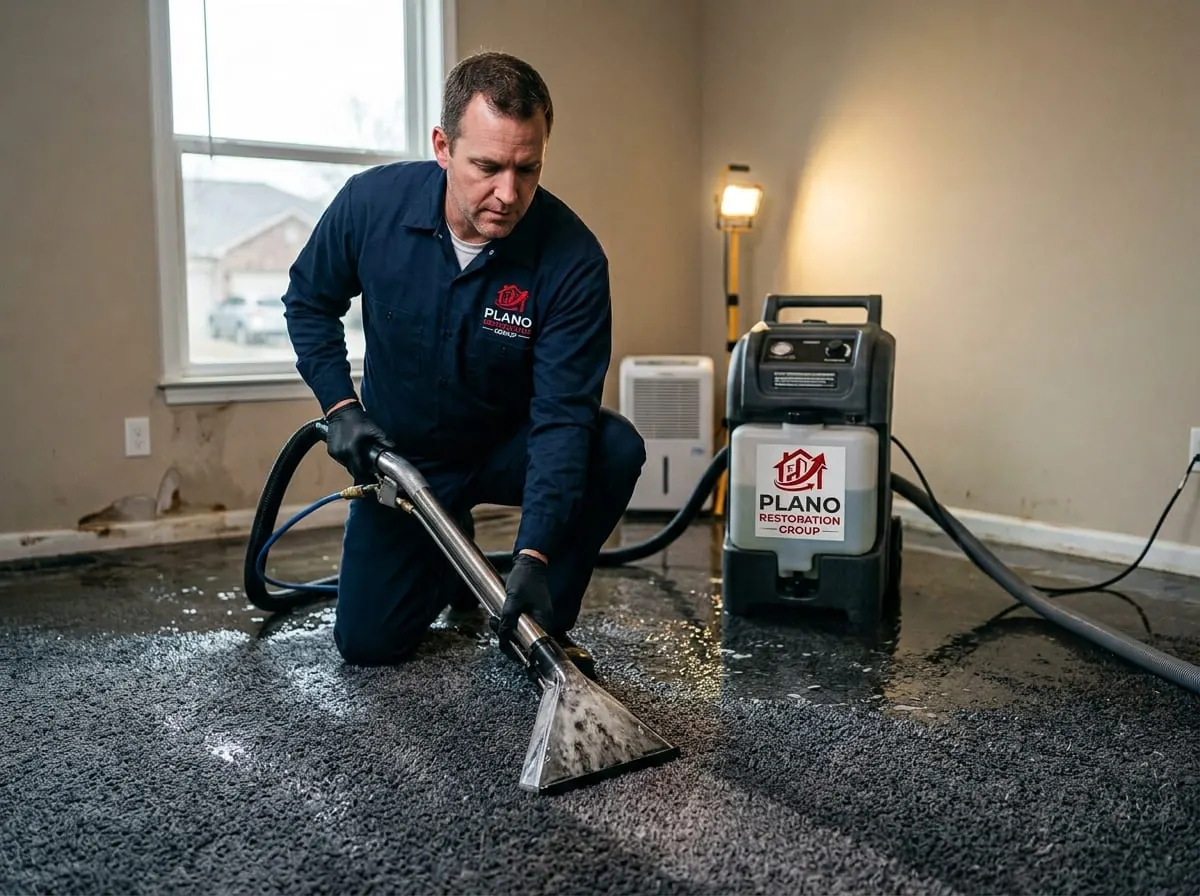
Why Carpet Is Especially Vulnerable to Water
Carpet padding holds water long after the visible surface looks dry, which is exactly why walking on carpet after a leak often feels squishy well after the initial spill or flood happened. That trapped moisture, combined with the warm, humid conditions common in North Texas, creates fast-developing conditions for mold and mildew if it isn't addressed.
Common Causes in Plano Homes
Slab leaks under carpeted rooms, burst pipes, water heater failures, and storm intrusion during heavy spring rain are all frequent causes of carpet water damage locally. Because carpet is often installed directly over the concrete slab, a slab leak in particular can saturate a wide area of carpet and padding before it becomes visible.
Restoration Versus Replacement
Carpet exposed to clean water and addressed quickly can often be extracted, treated, and dried in place, especially if the padding hasn't been saturated too long. Carpet exposed to contaminated water — from a sewage backup or floodwater — or carpet that's been wet for an extended period typically needs to be removed and replaced, since padding and backing rarely dry out fully once heavily saturated.
The Extraction and Drying Process
The licensed, insured crews we dispatch typically start with deep extraction to pull as much water as possible from both carpet and padding, followed by air movers and dehumidifiers set up to dry the subfloor underneath as well — drying just the surface carpet while leaving a wet slab underneath doesn't solve the underlying problem.
Why Quick Action Protects Your Flooring Investment
The faster wet carpet and padding are addressed, the better the odds of restoring rather than replacing them, and the lower the risk of odor or mold setting into the fibers and pad. Delaying even a day or two in Texas heat and humidity can be the difference between a successful dry-out and a full carpet replacement.
Frequently Asked Questions
Can wet carpet always be saved?
Not always — it depends on the water source, how long it sat, and how saturated the padding got. Clean water caught quickly has good odds; contaminated water or long-standing moisture usually means replacement.
How do I know if my carpet padding needs to be replaced?
If the padding has been saturated for more than about 24 to 48 hours, or if the water source was contaminated, replacement is typically recommended even if the visible carpet looks salvageable.
Will drying wet carpet get rid of odor?
Proper extraction and drying resolves most odor issues from clean water, but padding that stayed wet too long can trap odor-causing bacteria that surface cleaning alone won't fully remove.
Does carpet water damage from a slab leak affect the slab underneath?
The slab itself typically isn't damaged by water sitting on it, but it does need to be fully dried before new carpet or padding goes back down, otherwise trapped moisture can lead to mold under the new flooring.
Is water-damaged carpet covered by insurance?
It depends on the cause — sudden pipe failures are often covered, while gradual leaks or flood-related damage may be treated differently. A restoration partner can help document the damage for your claim.
Wet carpet spreading mold risk fast — call (469) 277-7924 for 24/7 extraction and drying.
Call (469) 277-7924