
Water Damage Restoration Process: What to Expect
Not knowing what to expect after a water damage call can add stress to an already difficult situation. While every job varies with the size and cause of the damage, restoration follows a fairly consistent sequence from the first phone call through final repairs.
Here's what homeowners in Plano can typically expect when a local restoration partner is dispatched to their home.
Call (469) 277-7924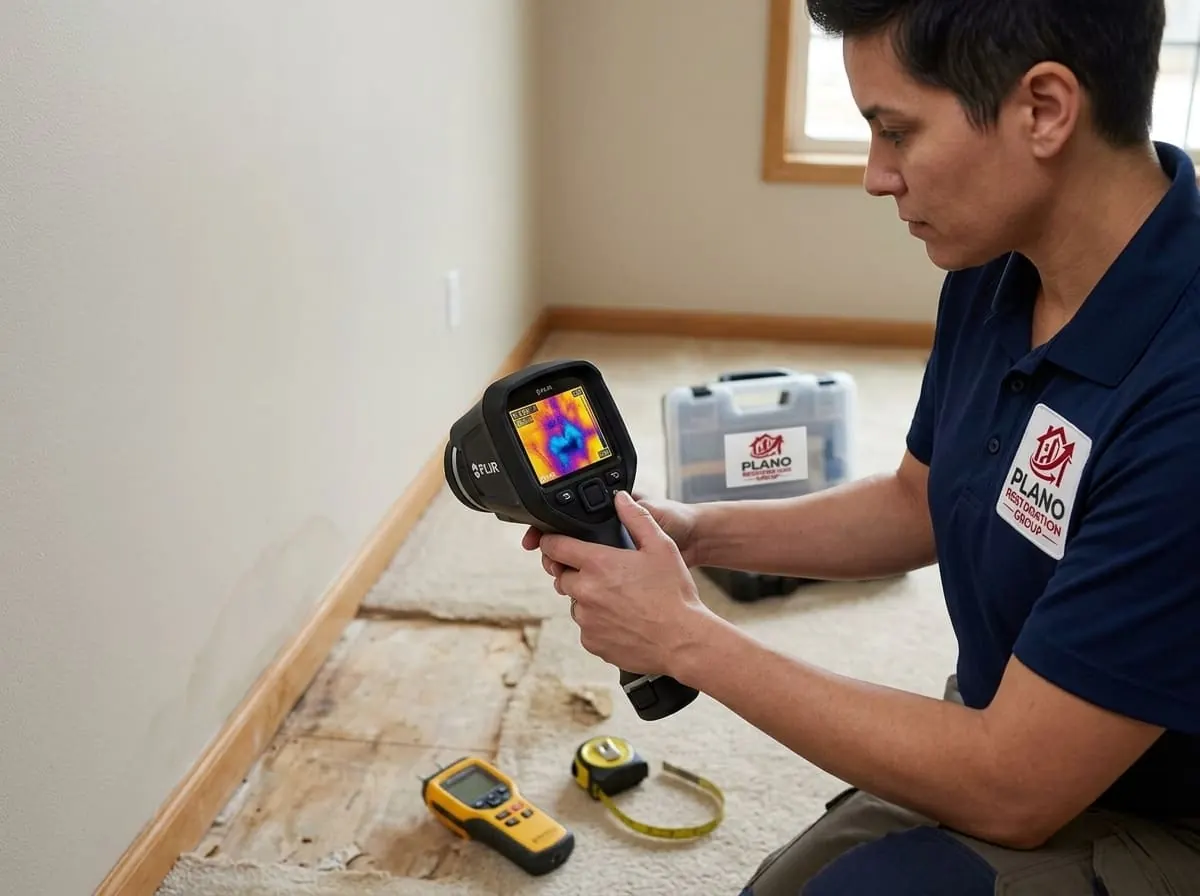
Step 1: The Initial Call and Dispatch
When you call, the goal is to get a licensed, insured restoration partner moving toward your home as quickly as possible, since water damage response operates 24/7/365. A brief description of what's happening — active leak, flooding, sewage backup — helps the dispatched crew arrive prepared with the right equipment.
Step 2: Inspection and Damage Assessment
On arrival, crews assess the source and extent of the water damage, using moisture meters and sometimes thermal imaging to understand how far water has traveled beyond what's visible — an important step in slab-on-grade Plano homes, where water can spread sideways into walls and under flooring in ways that aren't obvious at first glance.
Step 3: Water Extraction
Standing water is removed using pumps and extraction equipment appropriate to the volume involved, from portable units for a single room to truck-mounted systems for larger events. This step typically happens as fast as possible, since every additional hour of standing water increases the risk to flooring, drywall, and cabinetry.
Step 4: Structural Drying and Dehumidification
Once bulk water is gone, air movers and commercial dehumidifiers are set up to dry out remaining moisture in walls, subfloor, and framing. Given North Texas humidity, this step often takes longer than homeowners expect, and equipment typically stays in place for several days with moisture readings tracked until materials reach a normal, dry range.
Step 5: Cleaning, Repair, and Final Walkthrough
Any materials that couldn't be salvaged — flooring, drywall, baseboards — are removed and replaced during this phase, and affected areas are cleaned and, if needed, treated to prevent mold. A final walkthrough confirms the space is dry and repairs are complete before the job is considered finished.
Frequently Asked Questions
How soon after I call will a crew arrive?
Response times vary by the specifics of the situation and current demand, but restoration partners in our network operate 24/7/365 and prioritize active water emergencies to keep response time as short as possible.
Do I need to be home during the whole process?
You'll typically need to be present for the initial assessment and any decisions about materials that need to be removed, but drying equipment can often run unattended between crew check-ins.
How is the restoration process different for a slab leak versus a burst pipe?
The extraction and drying steps are similar, but a slab leak usually requires more extensive moisture mapping first, since the water source is under the foundation and the visible damage may not show exactly where the water traveled.
What happens if mold is found during the process?
If mold is discovered, it typically needs to be addressed before final repairs proceed, since rebuilding over an active mold issue just traps the problem. A restoration partner can coordinate mold remediation as part of the overall project.
How do I know the job is actually finished?
A completed job includes moisture readings confirming affected materials are back to a normal dry range, not just a visual check — ask for this documentation as part of your final walkthrough.
Know what to expect and get started — call (469) 277-7924 for 24/7 dispatch.
Call (469) 277-7924