
Flooded Home Cleanup
When a home floods — whether from a major storm, a sudden appliance failure, or water backing up from outside — the damage tends to spread across an entire floor rather than staying in one room. In a slab-on-grade home, floodwater has nowhere to drain to; it just sits and soaks until it's physically removed.
We connect Plano homeowners with local restoration partners equipped to handle large-scale water extraction, drying, and cleanup after a home floods.
Call (469) 277-7924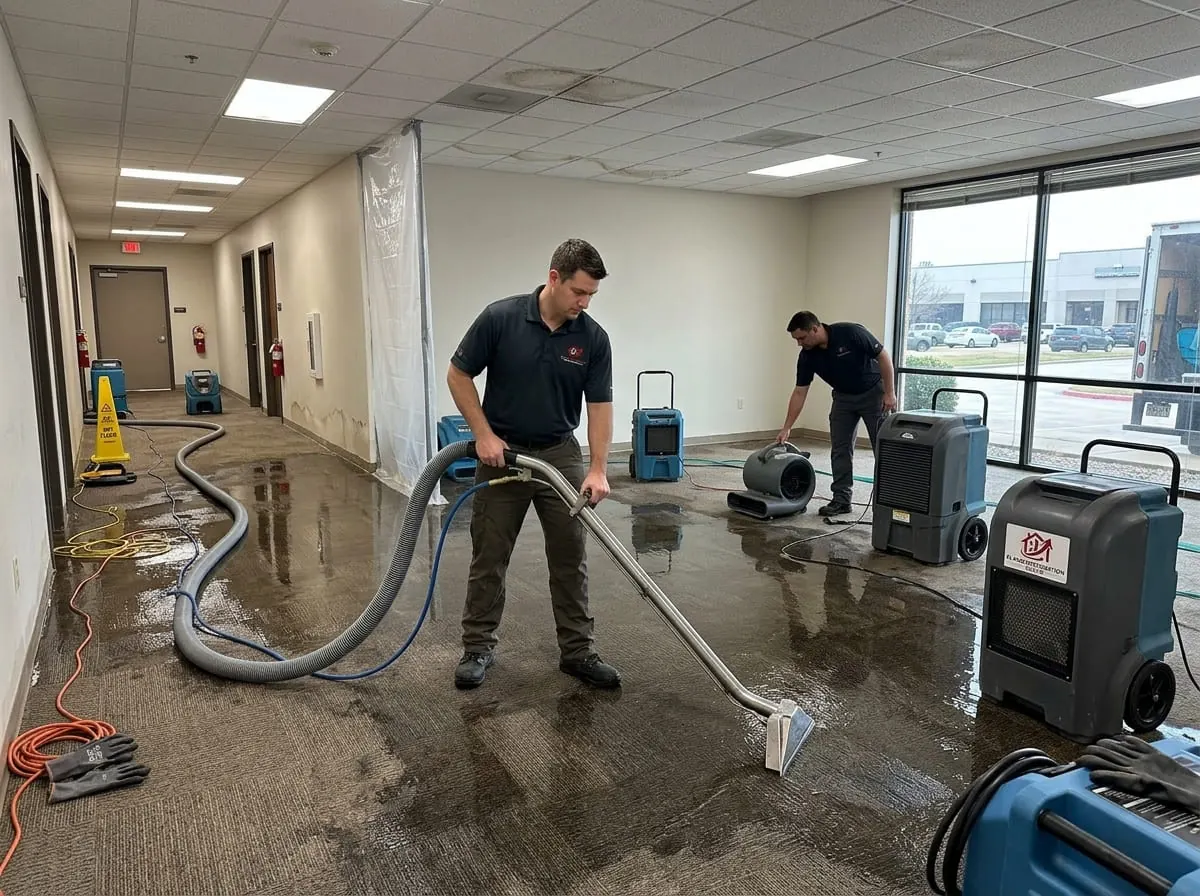
Common Causes of Home Flooding in Plano
Heavy spring thunderstorms can overwhelm drainage around a property and push water in under exterior doors or through low points in a home's grading. Homes near Rowlett Creek or Spring Creek face an added layer of risk, since both have a history of flash flooding after intense rainfall. Flooding can also come from inside the home — a major appliance failure or a supply line break that isn't caught quickly.
Why Slab-on-Grade Homes Flood Differently
Without a basement to contain water below the main living space, a flooded Plano home tends to see water spread horizontally across every room on the ground floor. That means flooring, baseboards, and the lower sections of drywall and cabinetry across a much larger footprint can be affected compared to a home where a flood might otherwise stay contained to one lower level.
What Flood Cleanup Involves
The licensed, insured crews we dispatch typically start with bulk water extraction across the affected area, then assess which materials can be dried in place versus which need to be removed — flooring, baseboards, and lower drywall are common candidates for removal in a significant flood. Air movers and dehumidifiers follow to bring the space back to a safe moisture level.
Why Fast Response Is Critical After a Flood
Floodwater — especially anything that entered from outside — can carry contaminants beyond what a clean water leak would, which raises the stakes on getting materials dried or removed quickly. The longer floodwater sits in a warm, humid Texas climate, the greater the risk of mold spreading beyond the immediately visible area.
Documentation Matters During a Flood Event
When multiple homes in an area flood during the same storm, insurance adjusters can be stretched thin. Photographing damage as soon as it's safe to do so, and working with a restoration partner who documents moisture readings and affected materials, helps support a smoother claims process later.
Frequently Asked Questions
What should I do first if my home floods?
If it's safe, shut off electricity to affected areas and avoid wading through standing water that could be near outlets or appliances. Call for emergency extraction as soon as possible, since floodwater damage compounds quickly.
Is flood damage from a storm covered by homeowners insurance?
Standard homeowners policies typically don't cover flooding from outside water sources like storm runoff or creek overflow — that usually requires separate flood insurance. Damage from an internal source, like a burst pipe, is often treated differently. Check your specific policy.
How long does it take to dry out a flooded home?
It varies with the size of the flooded area and how much material needs replacement versus drying in place. A single flooded room might dry in a few days, while a larger flood affecting most of the ground floor can take longer.
Will flooring need to be replaced after a flood?
Often, yes, particularly for materials like laminate, particleboard subfloor, or long-soaked carpet. Solid materials like tile usually survive, though the subfloor beneath can still need attention.
Are homes near Spring Creek or Rowlett Creek at higher flood risk?
Properties near these waterways can see a higher risk of flash flooding after intense rainfall, given the area's flood history. It's worth discussing flood-specific coverage with your insurance agent if you're in one of these areas.
Flooded home? Call (469) 277-7924 now for 24/7 emergency water extraction dispatch.
Call (469) 277-7924