
Soot Removal in Plano, TX
Soot is the fine black residue left behind after a fire, and it's more than just a cosmetic problem. It's acidic, which means it actively damages surfaces the longer it's left in place, and it can settle on everything from countertops to HVAC vents.
Plano Restoration Group connects Plano, TX homeowners with local restoration partners who specialize in soot removal, using methods matched to each surface to clean thoroughly without spreading residue further. Call (469) 277-7924 for 24/7 assistance.
Call (469) 277-7924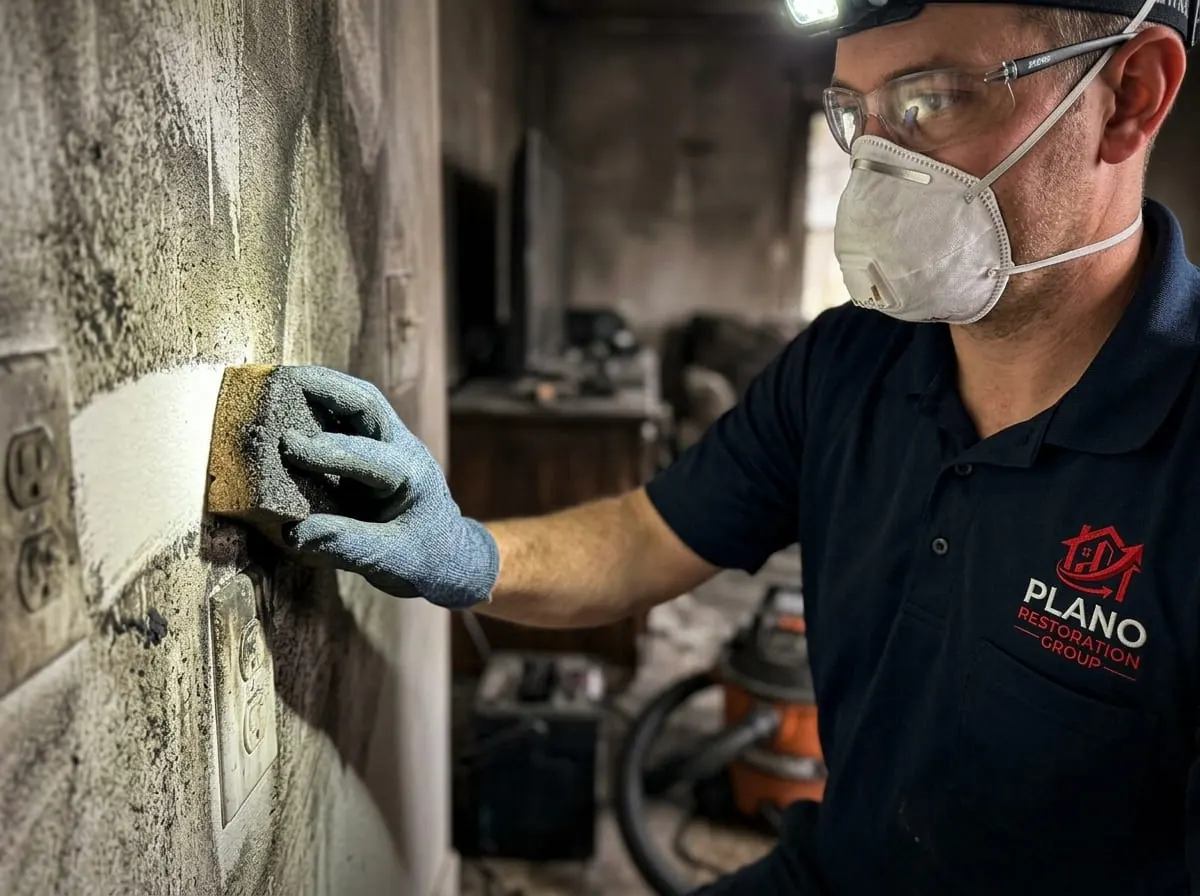
Why Soot Is More Than a Surface Stain
Soot is made up of fine carbon particles combined with acidic byproducts of combustion. When it settles on a surface, that acidity begins reacting with the material almost immediately. Metal fixtures can tarnish or corrode, grout and unsealed surfaces can absorb permanent discoloration, and glass and plastics can become etched. What looks like a simple black smudge right after a fire can become a permanent stain within a matter of hours to days if it isn't cleaned properly.
Where Soot Tends to Collect
Soot follows heat and air currents, so it often collects in unexpected places: along ceiling lines and around light fixtures, on top of cabinets, inside HVAC vents and return grilles, and on window sills and blinds. In homes with ceiling fans running at the time of a fire, soot can be distributed even further across a room. A thorough soot removal job accounts for these overlooked areas, not just the obviously blackened surfaces.
How Soot Removal Is Done
The restoration crews we dispatch typically start with dry sponging on porous or delicate surfaces, since introducing water or cleaning solutions too early can smear soot deeper into the material. Harder, washable surfaces are cleaned with solutions formulated to neutralize the acidic residue rather than simply wiping it around. HEPA vacuuming is used to lift loose soot particles from fabrics and carpeting without embedding them further. The specific method depends heavily on the surface material and the type of fire that produced the residue.
The Cost of Waiting
Because soot is acidic, delaying removal isn't a neutral decision, it actively increases the damage. Metal hardware, appliances, and fixtures that could have been cleaned and saved within the first day or two may need full replacement after a week of exposure to soot residue. This is one of the clearest reasons fire-related cleanup is treated as an emergency service rather than something to schedule at your convenience.
Frequently Asked Questions
Can I clean soot myself with household cleaners?
It's generally not recommended. Water and many household cleaners can smear soot deeper into surfaces or spread it to unaffected areas. Because soot is acidic, using the wrong cleaning approach can also worsen etching and staining rather than remove it.
How quickly does soot cause permanent damage?
It varies by surface, but soot's acidic properties can begin etching metal, glass, and unsealed materials within hours, with damage becoming more severe and less reversible over the following days. This is why prompt professional cleanup matters.
Does soot removal include cleaning inside air vents?
It should for a thorough job. Soot is easily pulled into HVAC systems and can settle inside ductwork and vent covers, where it will continue to circulate through the home if not addressed as part of the overall cleanup.
Will soot removal get rid of the smoke smell too?
Removing soot residue helps reduce odor, but smoke smell that has penetrated deep into drywall, insulation, or HVAC systems often requires additional deodorization steps beyond surface soot cleaning.
Every hour soot sits, it does more damage. Call (469) 277-7924 for prompt soot removal from a licensed local crew in Plano, TX.
Call (469) 277-7924