
Mold Remediation in Plano, TX
Mold shows up fast in North Texas homes, and once it takes hold it rarely goes away on its own. Whether you've spotted dark staining in a bathroom, smelled something musty in a closet, or you're dealing with the aftermath of a slab leak, Plano Restoration Group connects you with licensed, insured local mold remediation partners who can inspect the problem and get to work.
We operate as a 24/7 call center and dispatch service for Plano and the surrounding Collin and Dallas County suburbs. When you call, we route your job to a vetted local crew equipped to handle inspection, containment, removal, and the drying work that keeps mold from coming back.
Common Types of Mold Found in Plano Homes
Homeowners often use the term "black mold" for any dark growth, but several mold types show up in North Texas homes, ranging from common surface molds like Cladosporium and Aspergillus to the darker, more notorious Stachybotrys. Color alone isn't a reliable way to identify a species, and different molds can look similar to the untrained eye. What matters most for remediation purposes is the same regardless of type: the moisture source has to be found and corrected, and the affected material has to be properly removed or treated. The mold remediation partners in our network are equipped to assess visible growth and recommend next steps, including lab testing when it's warranted.
Why Mold Grows So Easily in North Texas Homes
Plano's long, humid summers create ideal conditions for mold growth any time moisture gets trapped somewhere it shouldn't be. Air conditioning systems that run constantly through the hottest months produce condensation, and a clogged drain line or poorly insulated duct can quietly feed moisture into an attic or closet for months before anyone notices. Add in the region's expansive clay soil, which stresses the plumbing running under and through slab foundations, and you have two of the most common hidden moisture sources in this market: AC condensation issues and slab leaks. Because so much of Plano's housing stock dates to the 1970s–90s building boom, aging plumbing and HVAC components are a real factor in many mold calls we route today.
How Hidden Water Intrusion Leads to Mold
Mold needs three things to grow: a food source (most building materials qualify), the right temperature, and moisture. Homes rarely lack the first two, so moisture control is the whole game. A slab leak can run for weeks under flooring before it's ever detected, silently wicking moisture into carpet pad, baseboards, and drywall. A slow roof leak after a hailstorm can do the same thing in an attic. By the time a musty smell or visible staining shows up, growth may already be established behind the wall or under the floor — which is exactly why prompt inspection matters when something seems off.
What's Included When You Call Plano Restoration Group
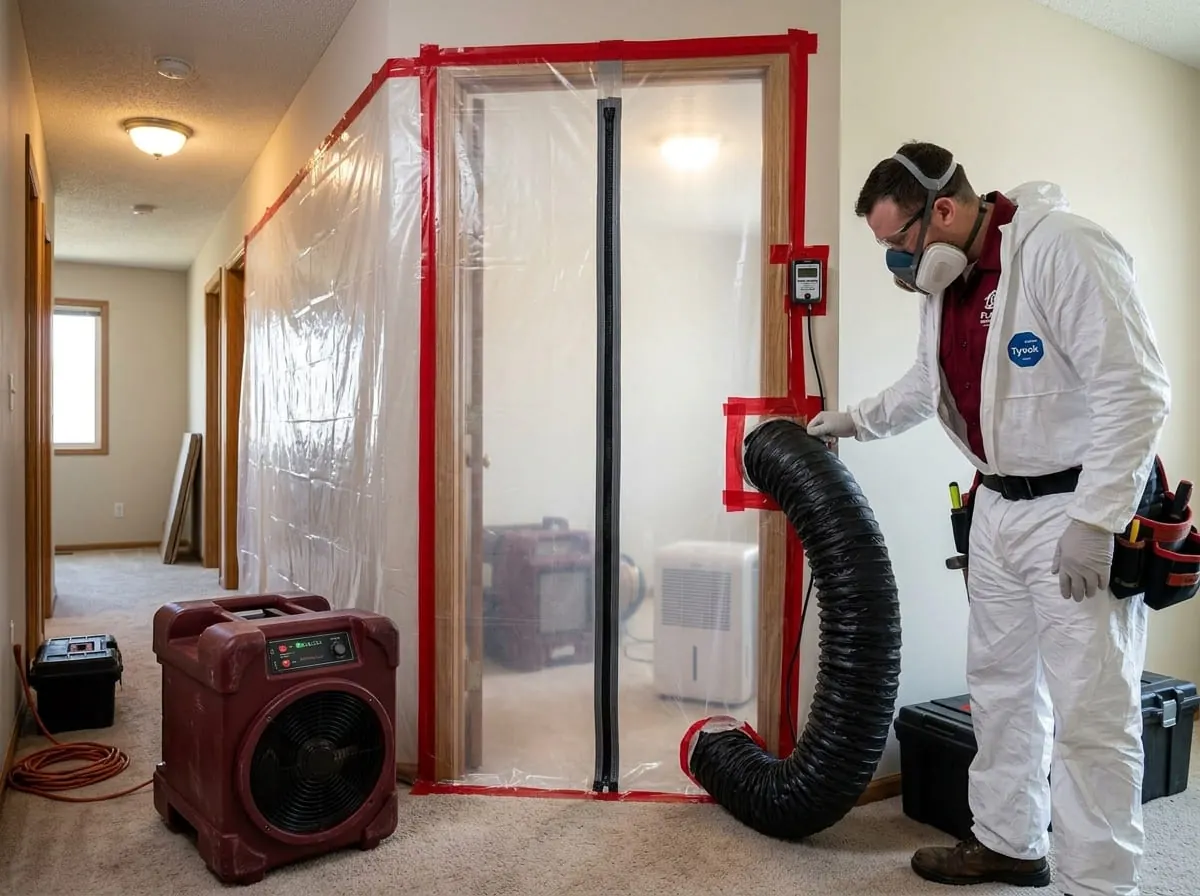
When you reach out, we ask a few quick questions about what you're seeing and where, then dispatch the request to a licensed, insured mold remediation partner serving your area of Plano or the surrounding suburbs. Depending on the job, that can include visual inspection, moisture mapping, containment setup, air scrubbing, removal of affected materials, and coordination with your insurance carrier where applicable. Every job starts with identifying and addressing the moisture source — removing mold without fixing the underlying leak or condensation problem just invites it back.
Explore Our Services
Frequently Asked Questions
Is all mold in a Plano home dangerous?
Mold growth of any kind is generally something to address rather than ignore, since it can affect indoor air quality and continues to spread on damp materials over time. We're not able to make medical determinations over the phone, so if you have specific health concerns, that's a conversation for your physician. What we can do is connect you quickly with a local partner who can inspect the growth and recommend a remediation plan.
Do I need mold testing before remediation?
Not always. In many cases, visible mold with an identifiable moisture source can be addressed through remediation without lab testing. Testing is more useful when the source of a musty odor isn't visible, when growth has been extensive, or when documentation is needed for a real estate transaction or insurance claim. The partner dispatched to your home can advise on what makes sense for your situation.
Why does mold keep coming back after I clean it myself?
Surface cleaning with household products can remove visible staining, but it doesn't address moisture trapped behind drywall, under flooring, or inside insulation, and it may not fully remove mold that has grown into porous materials. If the underlying moisture source — a slab leak, an AC condensation issue, a roof leak — isn't identified and corrected, mold will typically return. That's why the process our partners follow always starts with finding the water source.
How fast can someone come look at mold in my Plano home?
We operate 24/7 and route calls to local mold remediation partners as they come in. Response times depend on partner availability and your location within our Plano-area service footprint, but our goal is always to get a licensed local crew engaged as quickly as possible — the sooner a moisture source is identified, the less material typically needs to be removed.
Notice mold, a musty smell, or recent water damage in your Plano home? Call Plano Restoration Group 24/7 at (469) 277-7924 and we'll connect you with a licensed, insured local mold remediation partner right away.
Call (469) 277-7924