
Slab Leak Water Damage Cleanup
Slab leaks are one of the most common — and most frustrating — water damage causes in Plano homes. Because the leak happens under a concrete foundation, it can run for weeks or months before a homeowner notices a warm spot on the floor, an unexplained spike in the water bill, or the sound of running water when every fixture is off.
We connect Plano homeowners with local restoration partners experienced in slab leak detection, water extraction, and the drying and cleanup work that follows once the leak is found.
Call (469) 277-7924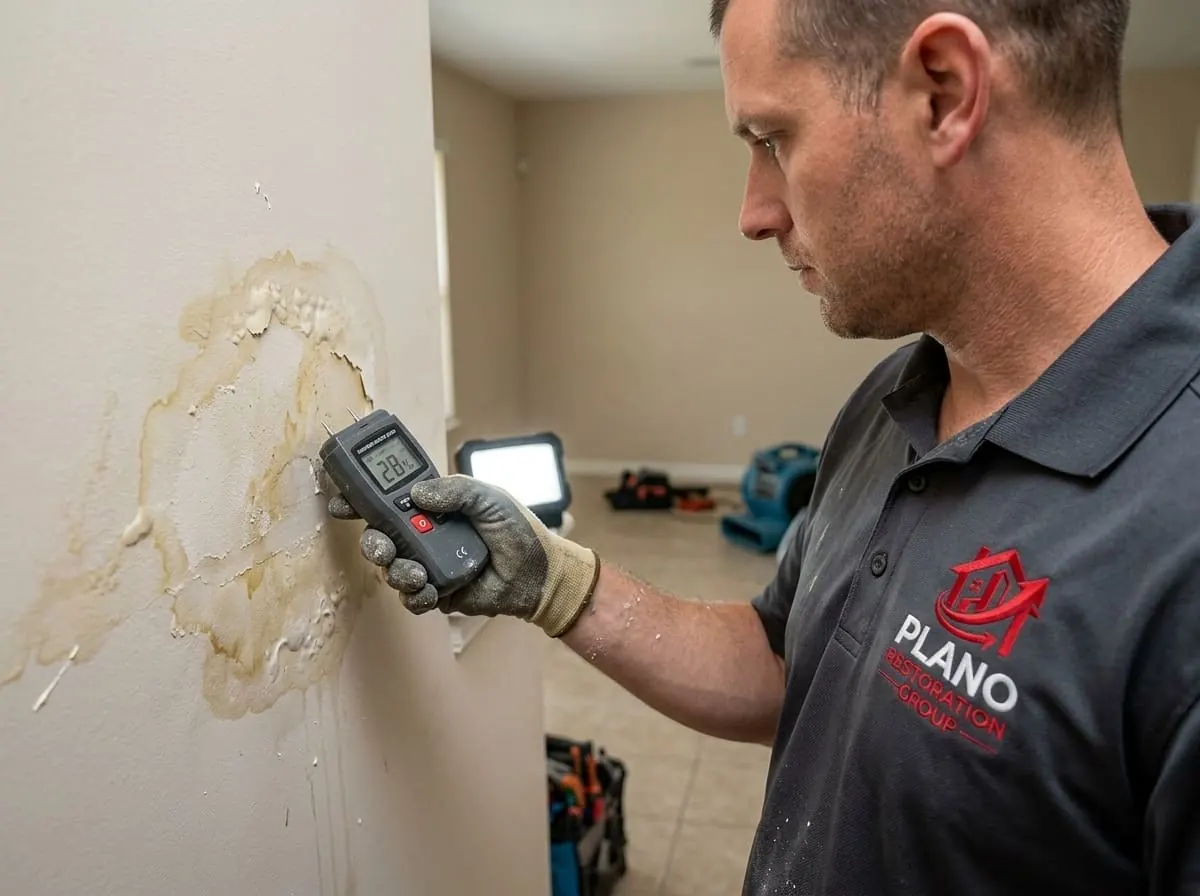
Why Slab Leaks Are So Common in Plano
North Texas sits on expansive clay soil that swells when saturated and shrinks during dry stretches. That constant expansion and contraction puts ongoing pressure on the water lines running beneath a home's slab, and over time it can crack pipe joints or shift them enough to cause a leak. This is a genuinely regional issue, not a fluke — the soil itself is part of what makes slab leaks so much more common here than in areas built on more stable ground.
Aging Copper and Galvanized Lines Compound the Problem
A large share of Plano's homes were built during the city's explosive growth in the 1970s through 1990s, when copper and galvanized supply lines were standard. Decades later, those lines are well into their expected service life, and corrosion combined with soil movement is a common recipe for a slab leak. Newer homes in Plano's more recently developed neighborhoods aren't immune either, but older housing stock carries more risk.
How Slab Leak Water Damage Gets Cleaned Up
Once a leak is located — often with the help of a plumber or leak detection specialist — the restoration side of the job focuses on extracting any water that surfaced, drying out affected flooring, drywall, and baseboards, and checking for mold growth if the leak went undetected for a long stretch. In many cases the slab itself needs to be accessed for the plumbing repair, which the restoration crew coordinates around.
The Process: From Detection to Dry-Out
The licensed, insured restoration partners we dispatch typically start with moisture mapping to understand how far water has traveled from the leak point, since slab leaks often push water sideways under flooring long before it becomes visible. From there, extraction, targeted drying, and monitoring continue until moisture readings confirm the area is fully dry.
Why a Slow Leak Still Needs Fast Action Once Found
Just because a slab leak has been running slowly for weeks doesn't mean the cleanup can wait once it's discovered. Hidden moisture under flooring is exactly the kind of environment mold thrives in, and the longer it's left after detection, the more flooring, drywall, and in some cases subfloor may need to be replaced instead of dried.
Frequently Asked Questions
What are the warning signs of a slab leak?
A warm spot on the floor, an unexplained rise in your water bill, the sound of running water with everything off, damp carpet or baseboards, or a musty smell can all point to a slab leak. Our Resource Center article on slab leak warning signs covers this in more detail.
Does a slab leak mean my foundation is damaged?
Not necessarily, but an undetected slab leak can contribute to soil erosion or additional movement under the foundation over time. A plumber or foundation specialist can assess whether the leak has caused structural concerns.
Will the restoration crew fix the actual leak in the pipe?
Restoration crews focus on the water damage — extraction, drying, mold prevention — while the pipe repair itself is typically handled by a licensed plumber. Many restoration partners coordinate closely with a plumber so the two jobs line up.
How long does slab leak cleanup usually take?
It depends on how long the leak ran undetected and how far water traveled. A recently discovered leak with limited spread may dry out in a few days, while a long-running leak with hidden damage can take longer.
Is slab leak damage covered by insurance?
Coverage varies — many policies distinguish between sudden pipe failures and gradual, long-term leaks. Our water damage insurance claims help page explains what documentation typically matters for a slab leak claim.
Suspect a slab leak? Call (469) 277-7924 to get connected with a local restoration partner today.
Call (469) 277-7924