
Emergency Water Extraction in Plano, TX
When water is actively pooling on your floors — from a burst supply line, an overflowing appliance, or a storm that got in faster than you could stop it — every extra hour it sits raises the risk of warped flooring, ruined drywall, and mold. Emergency water extraction is the first and most urgent step in stopping a water event from turning into a much bigger repair.
Plano Restoration Group connects homeowners with local restoration partners who run 24/7 and can dispatch extraction equipment to your home as soon as you call.
Call (469) 277-7924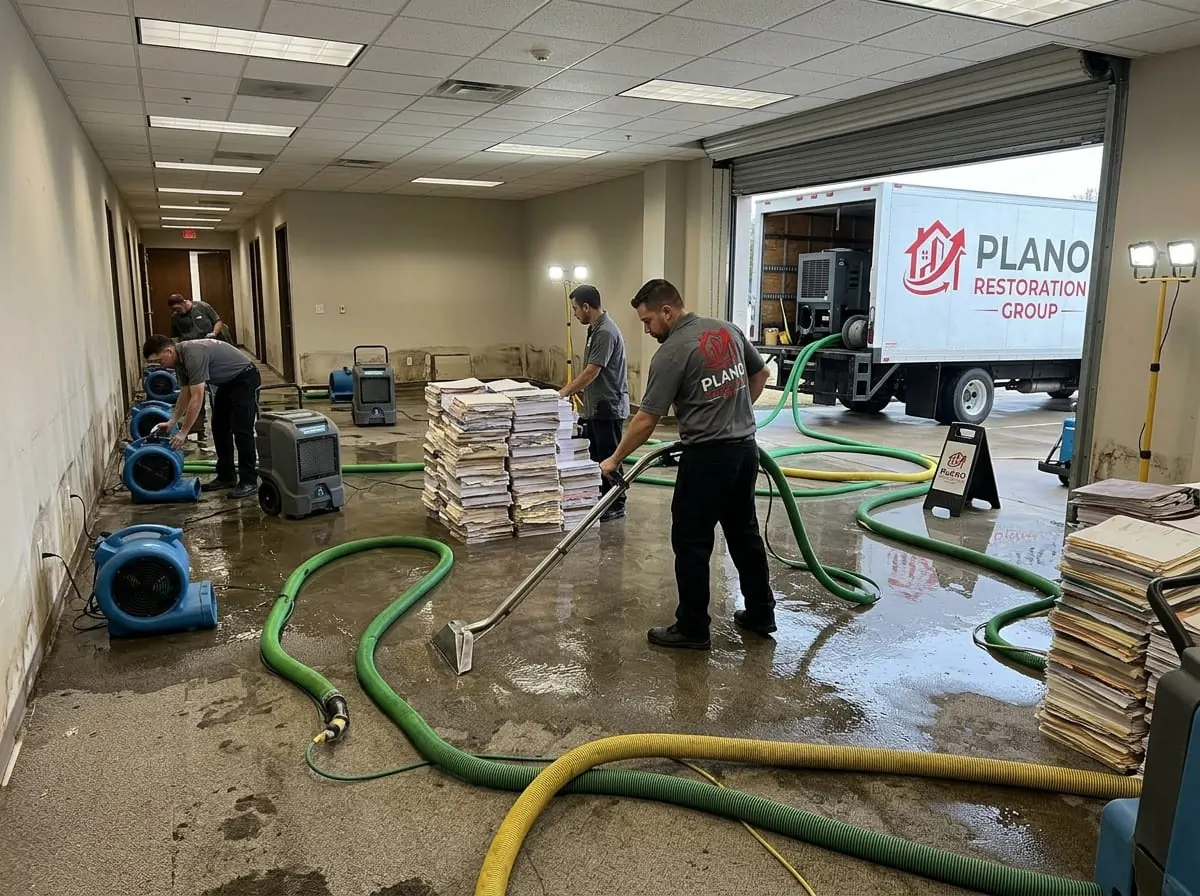
What Counts as an Extraction Emergency
Anything from a few inches of water across a kitchen floor to a flooded utility room or garage qualifies. Common triggers in Plano include a supply line letting go inside a wall, a washing machine hose failure, an overflowing toilet or tub, or wind-driven rain finding its way in during a spring storm. In each case, the priority is the same: get standing water out before it soaks further into flooring, baseboards, and subfloor.
Why Extraction Happens Fast in Slab-on-Grade Homes
Without a basement to contain a leak, water in a typical Plano home spreads across the slab and gets wicked up into drywall, cabinet bases, and carpet padding almost immediately. There's no lower level to catch the overflow — water just keeps moving outward until something stops it. That's why crews prioritize pulling standing water first, then move into detection work to find water that has already traveled into walls or under flooring.
What the Crew Does On Site
The licensed, insured crews we dispatch typically start with truck-mounted or portable extraction equipment to remove bulk standing water, then use moisture meters and thermal imaging to map how far water has traveled into walls, subfloor, and cabinetry. Anything that can't be dried in place — soaked carpet padding, ruined baseboards — gets flagged for removal before drying equipment goes in.
Why Response Time Matters So Much
In the heat and humidity typical of a North Texas summer, or even a mild winter day with the heat running, mold can start developing in as little as 24 to 48 hours on wet materials. Fast extraction limits how much material has to be replaced later and shortens the overall drying timeline, which usually means a lower total repair cost.
Frequently Asked Questions
How much water needs to be present before I should call?
Any standing water from a leak, appliance failure, or storm intrusion is worth a call. Even what looks like a small puddle can mean a much larger amount of water has already soaked into flooring or walls.
Can I just use a wet/dry vacuum myself?
A shop vac can help in a true pinch, but it won't remove water that has already traveled into subfloor, carpet padding, or wall cavities. Professional extraction equipment paired with moisture detection catches what's hidden.
Will extraction crews also handle the drying afterward?
Yes — extraction is normally the first phase of a larger structural drying and dehumidification process, handled by the same dispatched crew from start to finish.
Is emergency extraction available at night or on weekends?
Water damage response through our network operates 24/7/365, including nights, weekends, and holidays, since water emergencies don't wait for business hours.
Standing water won't wait — call (469) 277-7924 now for 24/7 emergency extraction dispatch.
Call (469) 277-7924