
Mold Remediation Process: What to Expect
If you've never dealt with mold before, it's natural to wonder what actually happens once a remediation crew arrives — how long it takes, whether you need to leave the house, and how you'll know the job is done. Plano Restoration Group connects you 24/7 with licensed, insured local mold remediation partners, and while every job varies with its specifics, most follow a similar sequence of steps.
Knowing what to expect ahead of time makes the process less stressful and helps you ask the right questions when a partner arrives to assess your home.
Call (469) 277-7924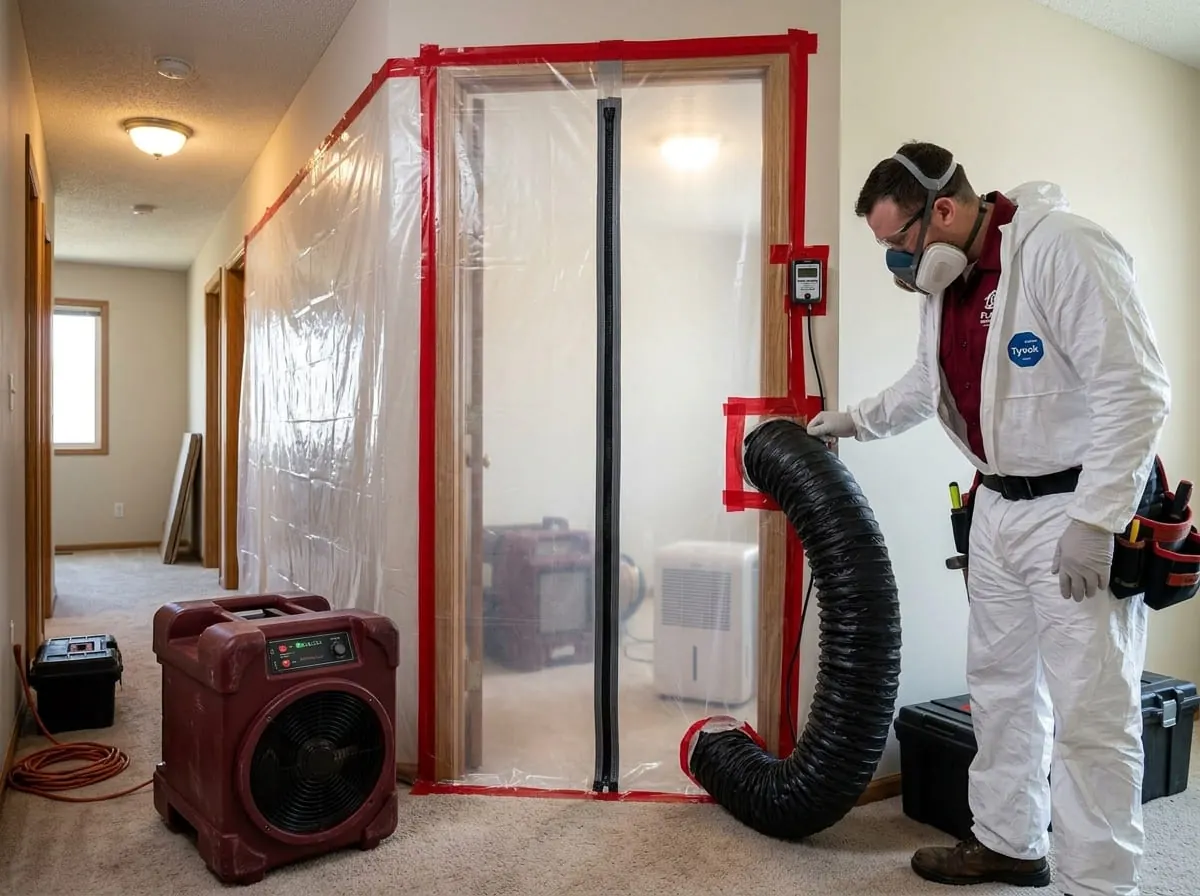
Step 1: Inspection and Moisture Source Identification
Every remediation job starts with an inspection to confirm the extent of visible growth and identify the moisture source behind it — a slab leak, a roof leak, poor bathroom ventilation, or an AC condensation issue are all common culprits in Plano homes. Moisture meters and sometimes thermal imaging are used to check for elevated moisture in materials that look dry on the surface. This step matters because remediation without addressing the source tends not to hold.
Step 2: Containment Setup
Before any material is disturbed, the work area is typically sealed off with plastic sheeting and negative air pressure equipment to keep mold spores from spreading to unaffected parts of the home during the work. The size and rigor of containment scales with the job — a small bathroom area needs less than an attic or a multi-room job affecting several materials.
Step 3: Removal and Treatment of Affected Materials
Porous materials that can't be adequately cleaned — drywall, carpet padding, insulation, and in some cases wood framing — are removed and bagged for disposal within the containment area. Materials that can be salvaged are typically cleaned with HEPA vacuuming and treated with an antimicrobial solution. Air scrubbers run throughout this phase to capture airborne spores generated by the work.
Step 4: Drying and Source Repair Coordination
If the moisture source is still active — a leak that hasn't been fixed, for example — that repair needs to happen alongside or before the remediation work is considered complete. In cases involving recent water damage, drying equipment may run for several days to bring moisture levels in remaining materials back to normal before reconstruction begins. The licensed, insured mold remediation crews we dispatch generally coordinate with plumbers, roofers, or HVAC technicians as needed when the source repair falls outside their own scope.
Step 5: Final Clearance and Reconstruction
Once removal and treatment are complete, many jobs include a final visual inspection, and larger or insurance-involved jobs sometimes include post-remediation air or surface testing to confirm the area meets acceptable clearance levels before it's closed back up. From there, reconstruction — replacing removed drywall, flooring, or insulation — can begin, either through the same partner or a separate contractor depending on how the job was scoped.
Frequently Asked Questions
Do I need to leave my house during mold remediation?
It depends on the size and location of the job. A small, well-contained area like a bathroom or closet often doesn't require homeowners to leave. Larger jobs, or ones affecting HVAC systems or living spaces you use daily, may be more comfortable to avoid during active work. The partner scoping your job can advise based on your specific situation.
How long does the full mold remediation process take?
Timeline varies significantly with the size of the job. A small, contained area might be completed within a day or two, while larger jobs involving extensive material removal, source repair, and reconstruction can take a week or more. The partner assessing your home can give you a project-specific estimate.
How do I know when remediation is actually finished?
Most jobs conclude with a final visual inspection to confirm all affected material has been addressed and the moisture source is resolved. For larger or insurance-related jobs, post-remediation testing may be used to document that the area meets acceptable clearance levels before reconstruction closes it up.
Will I need to move furniture or belongings before remediation starts?
Often yes, at least for items in or near the containment area — this protects your belongings from dust and treatment chemicals and gives the crew clear access to the work area. The dispatched partner will let you know what to move before work begins.
What happens if more mold is found once work has started?
It's not uncommon for a crew to find additional affected material once a wall is opened or flooring is pulled up, since mold can spread further than what's visible on the surface. If this happens, the partner working on your home should communicate the change in scope and any cost impact before proceeding.
Want to know what the remediation process will look like for your specific situation? Call Plano Restoration Group 24/7 at (469) 277-7924 to connect with a licensed local partner.
Call (469) 277-7924