
Bathroom Mold Removal
Bathrooms are the most humid rooms in a typical Plano home, which makes them one of the most common places mold takes hold — often in grout lines, on ceiling drywall above the shower, or behind a toilet or vanity where a slow leak has gone unnoticed. A little surface mildew on tile grout is a normal maintenance issue most homeowners handle themselves, but persistent or spreading growth usually points to a moisture problem that needs more than a spray bottle.
Plano Restoration Group connects you 24/7 with licensed, insured local partners who handle bathroom mold removal, from identifying the moisture source to removing and treating the affected materials.
Call (469) 277-7924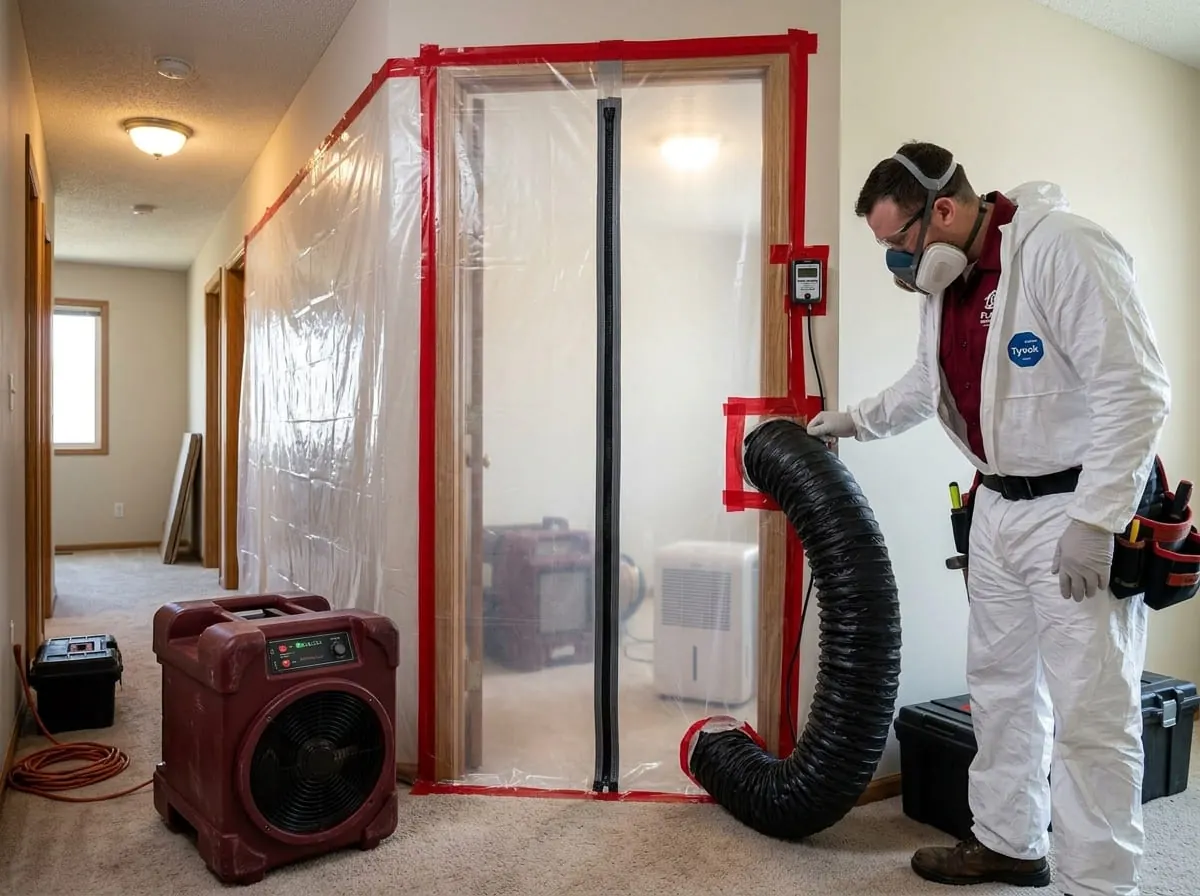
Why Bathroom Mold Keeps Coming Back
Regular showers and baths generate humidity every day, and without adequate ventilation — a working exhaust fan vented to the outside, for example — that moisture lingers on tile, grout, and drywall long enough for mold to establish itself. Beyond routine humidity, hidden leaks are a frequent culprit: a wax ring failure at the base of a toilet, a slow supply line leak under a vanity, or a shower pan that isn't sealed properly can all feed moisture into surrounding drywall and subfloor for months before it's noticed.
Surface Mildew vs. a Deeper Moisture Problem
Light mildew on grout lines that responds to regular cleaning is common and generally not a sign of a bigger issue. Growth that keeps returning shortly after cleaning, spreads beyond the immediately wet areas, appears on ceiling drywall, or comes with a persistent musty smell is more likely tied to an underlying moisture source — inadequate ventilation, a hidden leak, or both — that cleaning alone won't resolve.
How Professional Bathroom Mold Removal Works
The licensed, insured mold remediation crews we dispatch typically start by inspecting for the moisture source, checking behind fixtures, under the vanity, around the tub or shower surround, and in the subfloor if warranted. Affected drywall, grout, or subfloor material that can't be adequately cleaned is removed, and remaining surfaces are treated with an antimicrobial. Where ventilation is inadequate, that's flagged as part of the fix — since a bathroom with a properly functioning exhaust fan and moisture control is far less likely to see mold return.
Indoor Air Quality in a High-Moisture Room
Because bathrooms are used daily and mold there can affect indoor air quality in a frequently occupied space, addressing bathroom mold promptly is generally a good idea rather than something to defer. We're not positioned to make specific health claims — any health-related concerns are best directed to a physician — but connecting you with a licensed local partner to assess and remove the growth is something we can do right away.
Preventing Bathroom Mold From Returning
Once mold is removed and any hidden leak is repaired, the biggest factor in preventing a repeat is ventilation and airflow — running the exhaust fan during and after showers, wiping down wet surfaces, and addressing any grout or caulk that has failed and is letting water reach the wall behind it. The remediation partner working on your bathroom can flag any ventilation shortfalls they notice during the job.
Frequently Asked Questions
Is mold on bathroom grout always a serious problem?
Not usually. Light surface mildew on grout that comes back after normal cleaning is common in any bathroom and typically isn't a sign of a structural moisture issue. It becomes more of a concern when it spreads to drywall, ceilings, or areas away from direct water contact, or when it returns quickly and aggressively after cleaning.
What's causing mold on my bathroom ceiling if the shower doesn't reach it?
Ceiling mold in a bathroom is often tied to inadequate ventilation trapping humid air near the ceiling, or in some cases a roof or plumbing leak from above. An inspection can help pinpoint which is at play, since the fix is different depending on the cause.
Can I remove bathroom mold myself with bleach or vinegar?
Household cleaners can address light surface mildew on tile and grout. They're generally not effective on mold that has grown into drywall paper or subfloor material, and they don't address a hidden leak or ventilation problem feeding the growth. If cleaning isn't holding, it's worth having the area assessed.
How much does bathroom mold removal cost?
Cost depends on how much material needs to be removed — drywall, subfloor, or fixtures — and whether a leak repair is needed alongside the mold work. The partner who inspects your bathroom can give you a specific quote based on the scope.
Will removing bathroom mold require replacing my tile or vanity?
Not necessarily. Tile and grout can often be cleaned and treated in place. Drywall, subfloor, or cabinetry affected by a hidden leak are more likely to need removal and replacement, but the extent depends on how long the moisture was present before it was addressed.
Dealing with mold that keeps coming back in your bathroom? Call Plano Restoration Group 24/7 at (469) 277-7924 and we'll connect you with a licensed, insured local removal partner.
Call (469) 277-7924