
Black Mold Removal
Dark, blotchy growth on drywall, grout, or wood framing is one of the most common reasons Plano homeowners pick up the phone. "Black mold" is the term most people use, though several species of dark-colored mold can produce a similar appearance, and identifying the exact species usually requires lab testing rather than a visual guess.
Whatever the species, dark mold growth calls for the same response: find the moisture source, contain the area, and remove or treat the affected material properly. Plano Restoration Group connects you 24/7 with licensed, insured local partners equipped to handle that process from start to finish.
Call (469) 277-7924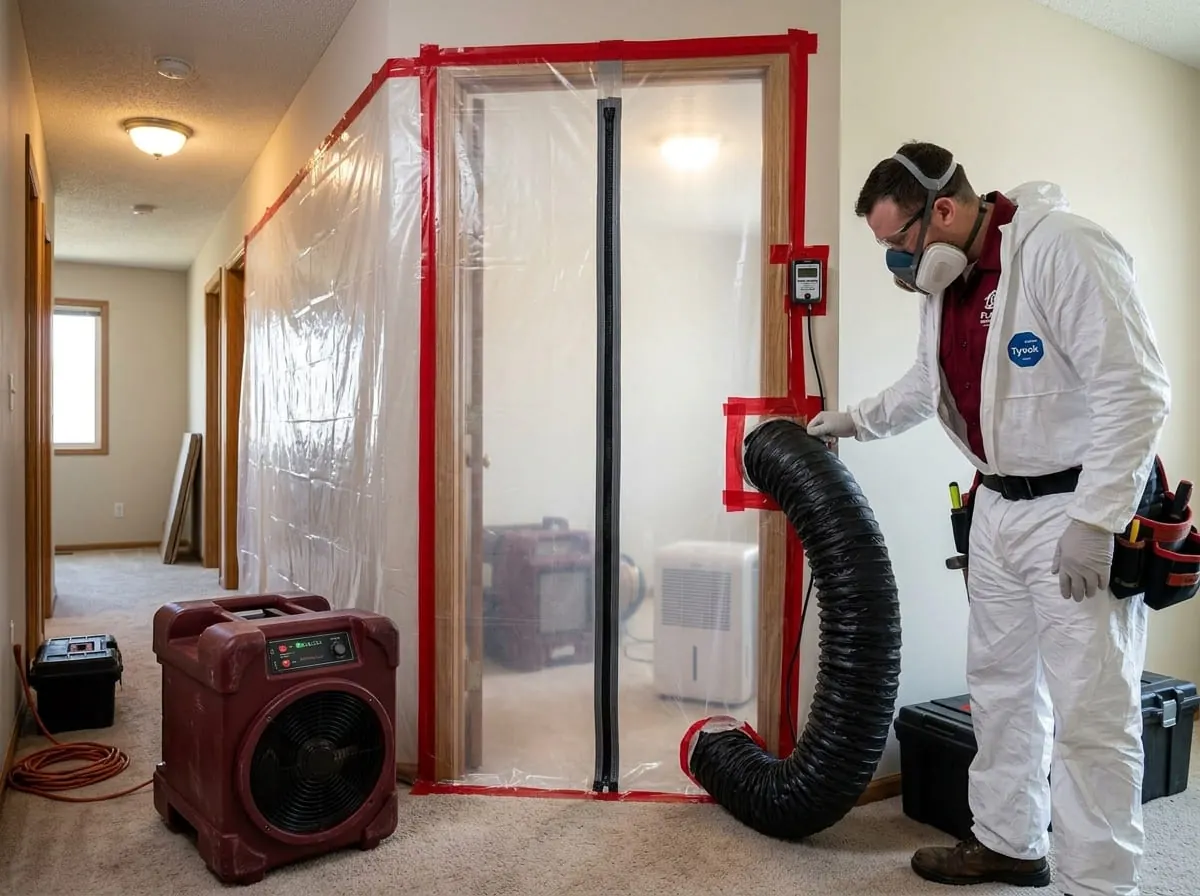
Where Dark Mold Typically Shows Up in Plano Homes
Dark mold growth tends to concentrate wherever moisture lingers longest: bathroom grout and drywall around tubs and showers, under sinks with slow leaks, in attics affected by roof leaks or poor ventilation, and near exterior walls where a slab leak or foundation crack has let moisture in. Because Plano sits on expansive clay soil that shifts with the seasons, homes here see more slab-related plumbing issues than many markets, which is one reason dark mold sometimes appears along baseboards or in flooring with no obvious external cause.
How Removal Differs From Basic Cleaning
Wiping visible growth off a hard surface with a household cleaner can address surface staining, but it doesn't remove mold that has grown into porous materials like drywall paper, wood, or carpet padding, and it does nothing about the moisture source feeding it. Professional removal starts with containment to keep spores from spreading to unaffected areas during the work, followed by physical removal of materials that can't be adequately cleaned, HEPA-filtered air scrubbing, and a final assessment to confirm the area is clear.
The Removal Process Our Partners Follow
The licensed, insured mold remediation crews we dispatch typically begin with an assessment of the affected area and the moisture source behind it. Containment barriers go up to isolate the work zone, followed by removal of unsalvageable materials — a section of drywall, damaged baseboard, or affected carpet, for example. HEPA vacuums and air scrubbers help control airborne spores during the work, and antimicrobial treatment is applied to remaining structural material as appropriate. The final step confirms the moisture source has been corrected, since removal without fixing the source of moisture rarely holds.
Indoor Air Quality Considerations
Mold growth of any color can affect indoor air quality, and disturbing it during removal can temporarily increase airborne spore counts if containment isn't handled properly. This is part of why professional containment matters, especially in occupied homes. We're not in a position to make specific health claims or diagnoses — if you or someone in your household has particular health concerns related to mold exposure, that's a conversation for a physician. What we can help with is getting a licensed local crew to your home to handle the removal properly.
Why Waiting Makes Removal Harder
Dark mold spreads as long as its moisture source remains active, and North Texas summers provide plenty of humidity to keep that process going. A small patch of growth that could be addressed with limited material removal today can spread across a larger section of wall or subfloor within weeks if left alone. Addressing it promptly generally means a smaller, more contained job.
Frequently Asked Questions
Is all dark mold the same as toxic black mold?
Not necessarily. Several species of mold appear dark in color, and Stachybotrys — the species most associated with the term "toxic black mold" in media coverage — is only one of them. Determining the exact species requires lab testing rather than a visual assessment, though the removal approach is largely the same regardless of species: find the moisture, contain the area, and remove the affected material.
Can I remove black mold myself?
Small surface areas on non-porous materials are sometimes manageable with household cleaners, but mold on porous materials like drywall or in HVAC systems typically requires professional removal to be handled thoroughly and safely, including proper containment to limit spore spread. If you're unsure of the extent of growth, a professional inspection is a reasonable first step.
How much does black mold removal cost in Plano?
Cost depends on the size of the affected area, which materials need to be removed, and whether the underlying moisture source requires separate repair (like fixing a slab leak or re-sealing a roof). The partner who responds to your call can provide a quote once they've assessed the scope.
Will black mold come back after removal?
It can, if the moisture source that caused it isn't identified and corrected. That's why the process our partners follow treats source correction as a required step, not an optional add-on — removing mold without fixing the leak or condensation issue behind it tends to be a temporary fix.
How fast should I address black mold once I see it?
Sooner is better. Because mold continues to spread as long as moisture is present, a delay of even a few weeks in a humid North Texas summer can let a small, contained patch grow into a larger job. Calling as soon as you notice dark growth is the best way to keep the scope of work manageable.
Seeing dark mold growth in your Plano home? Call Plano Restoration Group 24/7 at (469) 277-7924 and we'll connect you with a licensed, insured local removal partner.
Call (469) 277-7924