
Burst Pipe Cleanup & Water Damage Repair
A burst pipe rarely gives warning. One minute the house is quiet, the next there's water spreading across the kitchen floor or dripping through a ceiling from a line that let go inside a wall. Whether it's a sudden split from an old copper line or a fitting that finally gave out, the water damage that follows needs to be addressed fast, and the plumbing itself needs a real fix, not a patch.
We connect Plano homeowners with local restoration partners who handle both sides of a burst pipe event — stopping the water damage and coordinating repair of the line that caused it.
Call (469) 277-7924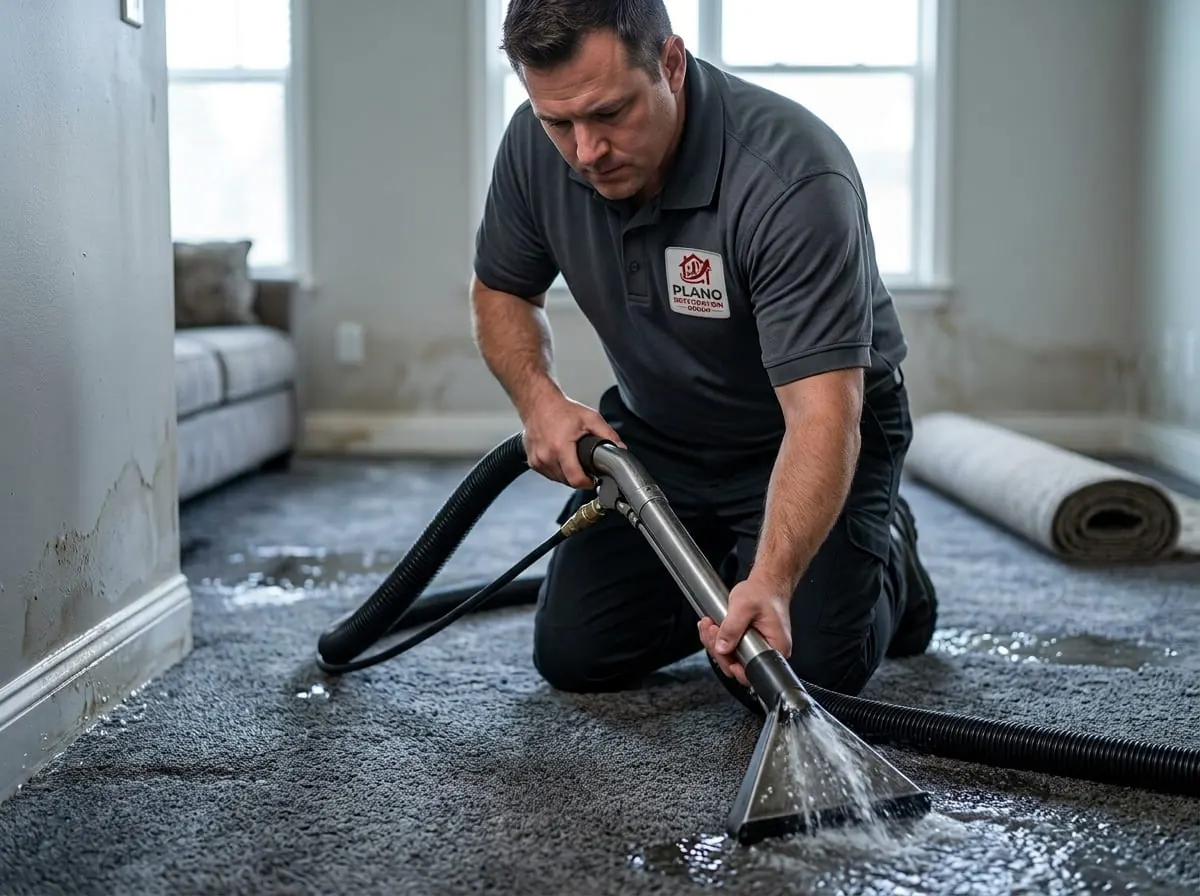
Why Pipes Burst in Plano Homes
A lot of Plano's housing stock dates back to the city's big growth years in the 1970s through 1990s, and copper and galvanized supply lines from that era are decades into their service life. Add in North Texas's expansive clay soil, which shifts as it wets and dries, and the movement can stress pipe joints and fittings both under the slab and inside walls until something finally fails.
What Cleanup Looks Like After a Burst Pipe
Once the water source is off, the first job is extracting standing water and assessing how far it traveled — burst pipes inside walls often push water into insulation, drywall, and flooring well beyond where the leak is visible. From there, crews set up drying equipment, remove any materials that can't be salvaged, and monitor moisture levels until everything reads dry.
Coordinating the Plumbing Fix and the Cleanup
The licensed, insured restoration partners we dispatch typically work alongside a plumber to make sure the actual pipe repair and the water damage cleanup happen in the right order — there's little point drying a wall cavity if the same line is going to fail again next month. Many restoration crews can help coordinate that timeline so repairs aren't done twice.
Why Speed Matters More Than It Seems
A burst pipe under pressure can release a surprising amount of water in a short time, and in a slab-on-grade home that water has nowhere to go but sideways into living space. The longer it sits, the more drywall, flooring, and cabinetry ends up needing full replacement instead of drying and repair.
Frequently Asked Questions
What should I do first if a pipe bursts?
Shut off the water at the main if you can safely reach it, then call for emergency extraction. Stopping the water source first prevents the damage from growing while help is on the way.
Are burst pipes usually covered by homeowners insurance?
Sudden, accidental pipe bursts are commonly covered, unlike damage from a long-term leak that went unaddressed. Coverage details vary by policy, and a restoration partner can help document the event for your claim.
How do I know if water reached inside my walls?
Signs include discoloration or bubbling on drywall, a musty smell, or baseboards that feel soft. Crews use moisture meters to check inside walls even when there's no visible sign yet.
Will I need to replace flooring after a burst pipe?
It depends on the material and how long water was present. Some flooring can be dried in place, while materials like particleboard subfloor or long-soaked laminate often need replacement.
Can this happen again after repair?
A proper plumbing repair addresses the specific failure point, but homes with aging supply lines and shifting clay soil can be prone to future issues elsewhere in the system — worth mentioning to your plumber during the repair.
Pipe burst and water spreading fast? Call (469) 277-7924 now for 24/7 emergency dispatch.
Call (469) 277-7924