
Water Damage Restoration in Plano, TX
A pipe bursts under the slab at 2 a.m., a water heater fails in the garage, or a spring storm sends water pouring in through the roofline — however it starts, water damage in a Plano home rarely stays contained to one room for long. Slab-on-grade construction, aging plumbing, and North Texas humidity all work against you once water gets loose inside a house.
Plano Restoration Group connects homeowners across Plano and the surrounding Collin and Dallas County suburbs with a network of licensed, insured local restoration partners who handle everything from emergency water extraction to structural drying and full repair. One call gets a dispatch moving, day or night.
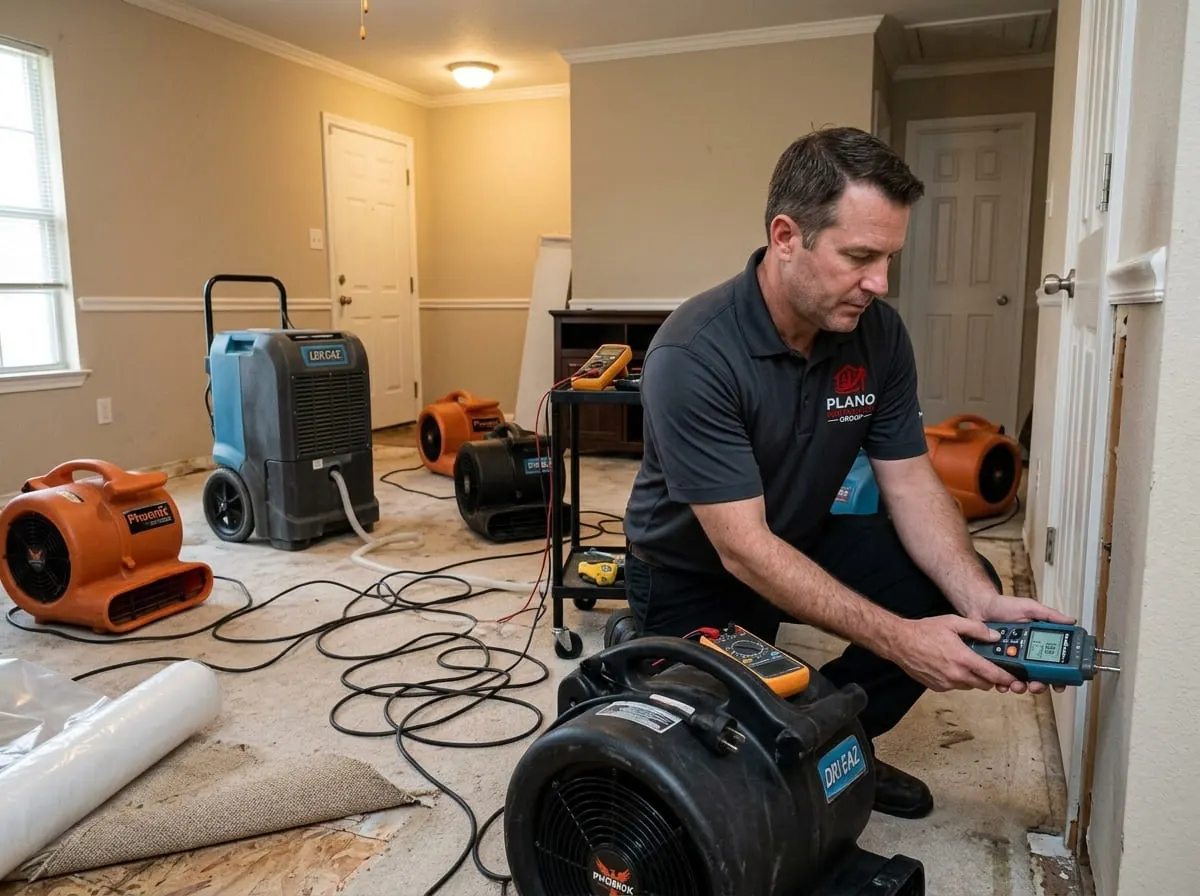
Why Water Damage Moves Fast in Plano Homes
Most homes in Plano were built slab-on-grade, without a basement to catch or contain a leak. That means water from a burst pipe, failed appliance, or roof intrusion has nowhere to go but across the floor and into walls, cabinetry, and flooring. In homes built during Plano's big growth years of the 1970s through 1990s, older plumbing and materials can make that spread even faster once water finds a gap in drywall or subfloor.
Clay Soil and Slab Leaks: A Local Problem
North Texas sits on expansive clay soil that swells when it's wet and shrinks when it dries out. That constant movement puts real stress on the water lines running under and through a home's slab, and it's a big reason slab leaks are such a common water-damage cause in Plano. Add in decades-old copper or galvanized supply lines in older neighborhoods, and a slow, hidden leak can go undetected for weeks before it surfaces as a warm spot on the floor, a spike in the water bill, or visible damage.
Hail Alley and Flash Flooding
Plano sits in what meteorologists call Hail Alley, where Gulf moisture and dry continental air collide to fuel severe spring thunderstorms across North Texas. Hail and wind-driven rain can force water in through roofs, attics, and window seals. Heavy storms can also push Rowlett Creek and Spring Creek out of their banks, and localized flash flooding after a hard spring rain is a real risk for homes near these waterways.
What a Water Damage Restoration Call Covers
Whichever service you need — emergency extraction, sewage cleanup, structural drying, or help navigating an insurance claim — a single call routes you to a licensed, insured restoration partner equipped to assess the damage, stop it from spreading, and get your home back to pre-loss condition.
Explore Our Services
Frequently Asked Questions
How fast can someone get to my house after I call?
Water damage response is treated as a 24/7/365 emergency. When you call, we work to connect you with a local restoration partner who can dispatch a crew as quickly as possible, since standing water and moisture only get more damaging the longer they sit.
Is water damage from a slab leak covered by homeowners insurance?
It depends on your policy and the cause of the leak — sudden, accidental damage is often treated differently than long-term, gradual leaks. A restoration partner can help document the damage, and our insurance claims help page walks through what to expect.
Do I need to worry about mold after a water leak?
Yes — mold can begin developing within 24 to 48 hours in a warm, humid North Texas home. That's part of why fast extraction and thorough structural drying matter, and why a dehumidification plan is part of most restoration jobs here.
What if my home doesn't have a basement — does that change anything?
Most Plano homes are slab-on-grade with no basement, so water damage tends to spread horizontally across floors and up into walls and cabinetry rather than pooling below the living space. Restoration crews plan extraction and drying around that reality.
Water damage gets worse by the hour — call (469) 277-7924 any time, day or night, to get connected with a local restoration partner.
Call (469) 277-7924