
Ceiling Water Damage Repair
A brown ring on the ceiling, a soft spot in the drywall, or water actively dripping from above are all signs that something above that ceiling — a roof, an upstairs bathroom, or an attic plumbing line — has a leak that needs attention now, not eventually. Left alone, ceiling water damage can progress from a cosmetic stain to a genuine collapse risk.
We connect Plano homeowners with local restoration partners who assess ceiling leaks, dry out the damage, and coordinate repair of the affected drywall, insulation, and framing.
Call (469) 277-7924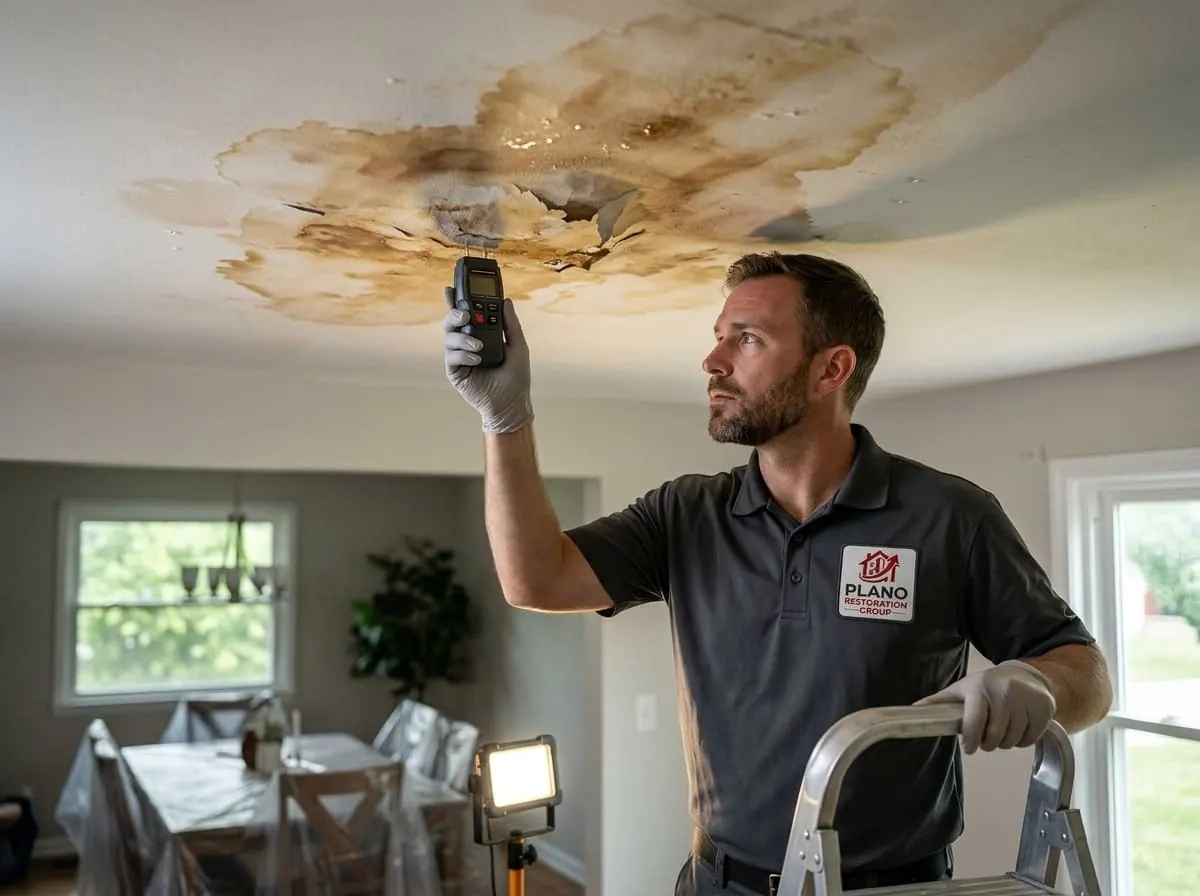
What Causes Ceiling Water Damage in Plano
Hail and wind-driven rain during North Texas storm season are common culprits, especially when hail has damaged roofing or flashing enough to let water in during the next rain. Ceiling leaks also commonly trace back to an upstairs bathroom, a leaking supply line in the attic, or condensation issues around an attic-mounted HVAC unit or water heater.
Why a Small Stain Can Mean a Bigger Problem
By the time a stain is visible on a ceiling, water has typically already saturated the drywall and insulation above it, and it may have been dripping for some time before pooling enough to show through. A stain that's growing, or drywall that feels soft or is sagging, can indicate a significant amount of trapped water and a real risk of the ceiling giving way.
How the Repair Process Works
The licensed, insured crews we dispatch typically start by identifying and stopping the water source — often working alongside a roofer or plumber — then extract any trapped water and dry out the ceiling cavity, attic insulation, and framing. Damaged drywall sections are removed if they can't be salvaged, and the area is monitored for moisture before repairs are finalized.
Why Fast Action Protects More Than the Ceiling
Water trapped above a ceiling doesn't stay there — it can travel along framing and show up in an adjacent room, or drip down into flooring, furniture, and electronics below. Addressing a ceiling leak quickly limits how far that damage spreads and reduces the chance of mold developing in the attic space above.
Frequently Asked Questions
Is a sagging ceiling dangerous?
It can be. A ceiling holding a significant amount of trapped water can be at risk of partial collapse. It's best to stay out of the room directly below a sagging or bulging ceiling section until it's been assessed.
Will my roof need to be repaired too?
If the ceiling leak traces back to roof or flashing damage, yes — the restoration crew typically works alongside roofing contractors to make sure the actual water entry point is fixed, not just the interior damage.
How long does ceiling water damage take to show up after a leak starts?
It varies. A significant leak can show a visible stain within a day, while a slow drip from an attic pipe or condensation issue might take weeks to become visible on the ceiling below.
Is hail damage to the roof covered by insurance?
Hail damage is commonly covered under homeowners policies, though coverage and deductibles vary. Our water damage insurance claims help page covers what documentation typically supports a storm-related claim.
Water stain spreading on your ceiling? Call (469) 277-7924 for 24/7 assessment and repair dispatch.
Call (469) 277-7924