
Structural Drying & Dehumidification
Removing standing water is only the first step after a water damage event — the moisture that soaked into drywall, subfloor, framing, and insulation has to come out too, or it becomes a mold problem within days. Structural drying and dehumidification is the part of the process that often takes the longest but matters just as much as the initial extraction.
We connect Plano homeowners with local restoration partners equipped with the monitoring tools and drying equipment to bring a home's moisture levels fully back to normal.
Call (469) 277-7924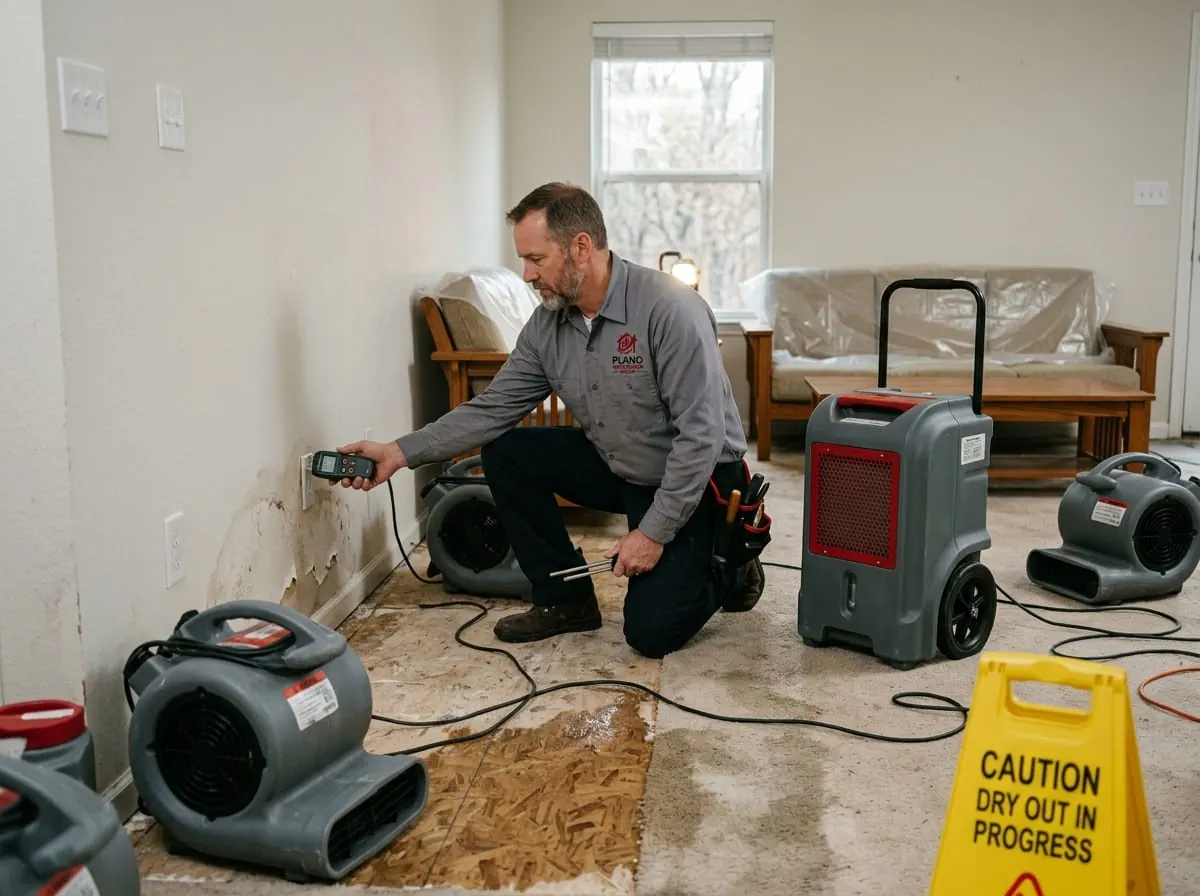
Why Extraction Alone Isn't Enough
Pulling standing water off a floor addresses what's visible, but materials like drywall, subfloor, and wood framing absorb moisture and hold onto it long after the surface looks dry. Without targeted drying, that trapped moisture keeps feeding conditions for mold growth and can lead to warping, swelling, or structural weakening over time.
Why North Texas Humidity Makes Drying Trickier
Summer humidity in North Texas can slow natural evaporation, meaning a wet structure left to 'air out' on its own dries much more slowly than most homeowners expect — sometimes not at all without mechanical help. That's part of why professional drying uses commercial-grade dehumidifiers and air movers rather than relying on open windows and fans.
How Moisture Is Measured and Tracked
The licensed, insured crews we dispatch typically use moisture meters and sometimes thermal imaging to map exactly where water traveled — including into wall cavities and under flooring that isn't visibly wet. Readings are tracked daily against dry industry benchmarks for each material, so equipment stays in place exactly as long as it's needed and no longer.
What the Drying Setup Usually Looks Like
A typical setup includes air movers positioned to circulate air across wet surfaces and commercial dehumidifiers pulling moisture out of the air itself, sometimes alongside specialized equipment for drying hardwood floors or wall cavities without causing further damage. Equipment often runs continuously for several days, with the crew returning to check progress.
Why Skipping or Rushing This Step Causes Problems Later
Ending the drying process early — even if a space looks and feels dry — can leave residual moisture inside walls or under flooring that surfaces weeks later as mold or a musty smell. Confirming dryness with equipment, not just a visual check, is what prevents a second, often larger, problem down the road.
Frequently Asked Questions
How long does structural drying usually take?
It varies with the size of the affected area and the materials involved, but a few days of continuous equipment operation is common for a typical room-scale water event, with larger or more saturated areas taking longer.
Can I just open windows and use fans instead?
In North Texas's often humid climate, natural airflow alone frequently isn't enough to fully dry a structure, especially materials like drywall and subfloor that hold moisture below the surface. Commercial dehumidifiers pull moisture out of the air far more effectively.
How do I know when drying is finished?
Crews use moisture meters to compare readings against known dry standards for each material, rather than judging by touch or appearance alone. Drying is considered complete when readings are consistently within normal range.
Does drying equipment use a lot of electricity?
Air movers and dehumidifiers do draw meaningful power when running continuously for several days, which is worth being aware of, though it's a small cost compared to the alternative of incomplete drying and follow-up mold remediation.
Don't let hidden moisture turn into mold — call (469) 277-7924 for 24/7 drying service.
Call (469) 277-7924