What to Do Immediately After a House Fire
A house fire is disorienting, and it's hard to know what to do first once the fire department has left. This guide walks through the practical steps for the hours and days immediately following a fire, so you can protect your family, your property, and your insurance claim.
1. Don't Re-Enter Until It's Been Cleared as Safe
Wait for fire officials to confirm the structure is safe to enter. Even after a fire is out, structural damage, weakened flooring, and hidden hot spots can pose real risks. If you're allowed back in, move carefully and avoid touching charred materials, which can still be hot, and be aware that soot residue can cause respiratory irritation.
2. Contact Your Insurance Company Right Away
Call your insurance provider as soon as possible to begin the claims process. They'll typically walk you through what documentation is needed and may send an adjuster out to assess the damage. Ask about coverage for additional living expenses if your home is temporarily uninhabitable, since many policies include this.
3. Secure the Property
A fire-damaged home is vulnerable to weather intrusion, theft, and further damage if windows, doors, or the roof were compromised. Board-up and tarping services are often part of an emergency restoration response and should happen as soon as possible after the fire to protect what's left of the structure and belongings.
4. Document Everything Before Cleanup Begins
Photograph and video the damage room by room before anything is moved, cleaned, or discarded. Try to compile a list of damaged or destroyed belongings, including approximate value and, where possible, receipts or photos of the items from before the fire. This documentation is important for your insurance claim and much harder to reconstruct later.
5. Address Immediate Needs: Housing, Medications, and Documents
If your home is uninhabitable, arrange temporary housing, whether with family, friends, or through your insurance's additional living expense coverage. Try to retrieve essential items like medications, identification, and important documents if it's safe to do so, or contact the relevant offices to request replacements if they were destroyed.
6. Get a Professional Assessment for Smoke and Soot
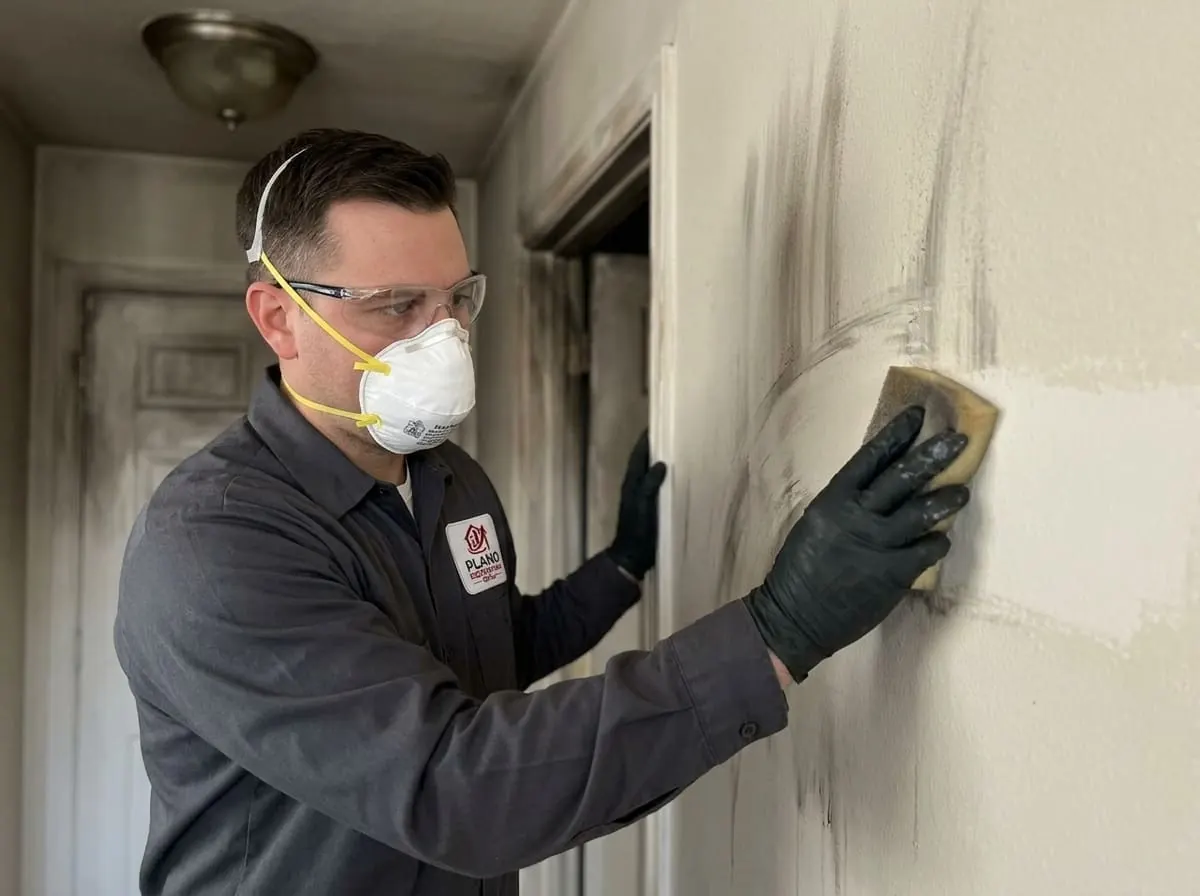
Fire damage typically extends well beyond the room where the fire started. Smoke and soot can travel through HVAC systems and settle in rooms far from the fire, and soot is acidic, meaning it continues to damage surfaces the longer it's left untreated. A professional assessment can identify the full extent of smoke and soot damage, which is often more widespread than it initially appears.
Key Takeaways
- Wait until fire officials clear the structure before re-entering
- Contact your insurance company right away to begin the claims process
- Securing the property with board-up and tarping helps prevent further damage
- Photograph and document everything before cleanup or repairs begin
- Smoke and soot damage often extends beyond the room where the fire started