Smoke Damage vs. Fire Damage: What's the Difference?
After a house fire, people often use 'fire damage' as a catch-all term, but fire and smoke actually cause distinct types of damage that require different responses. Understanding the difference helps explain why a fire in one room can affect an entire home.
What Fire Damage Actually Means
Fire damage refers to the direct destruction caused by flames and extreme heat: charred structural materials, melted fixtures, burned furniture and belongings, and heat-warped surfaces. This damage is typically confined to the area the fire actually reached, though heat can also travel and affect materials adjacent to the flames, such as scorching paint or warping nearby surfaces without direct contact.
What Smoke Damage Actually Means
Smoke damage is different: it's caused by the fine particles and chemical residue carried in smoke, which travel through the air and settle on surfaces well beyond where the fire itself burned. Smoke can move through hallways, HVAC ductwork, and gaps around doors, which is why a fire contained to a kitchen can still leave smoke odor and residue in bedrooms on the other side of the house.
Why Soot Is a Separate Problem
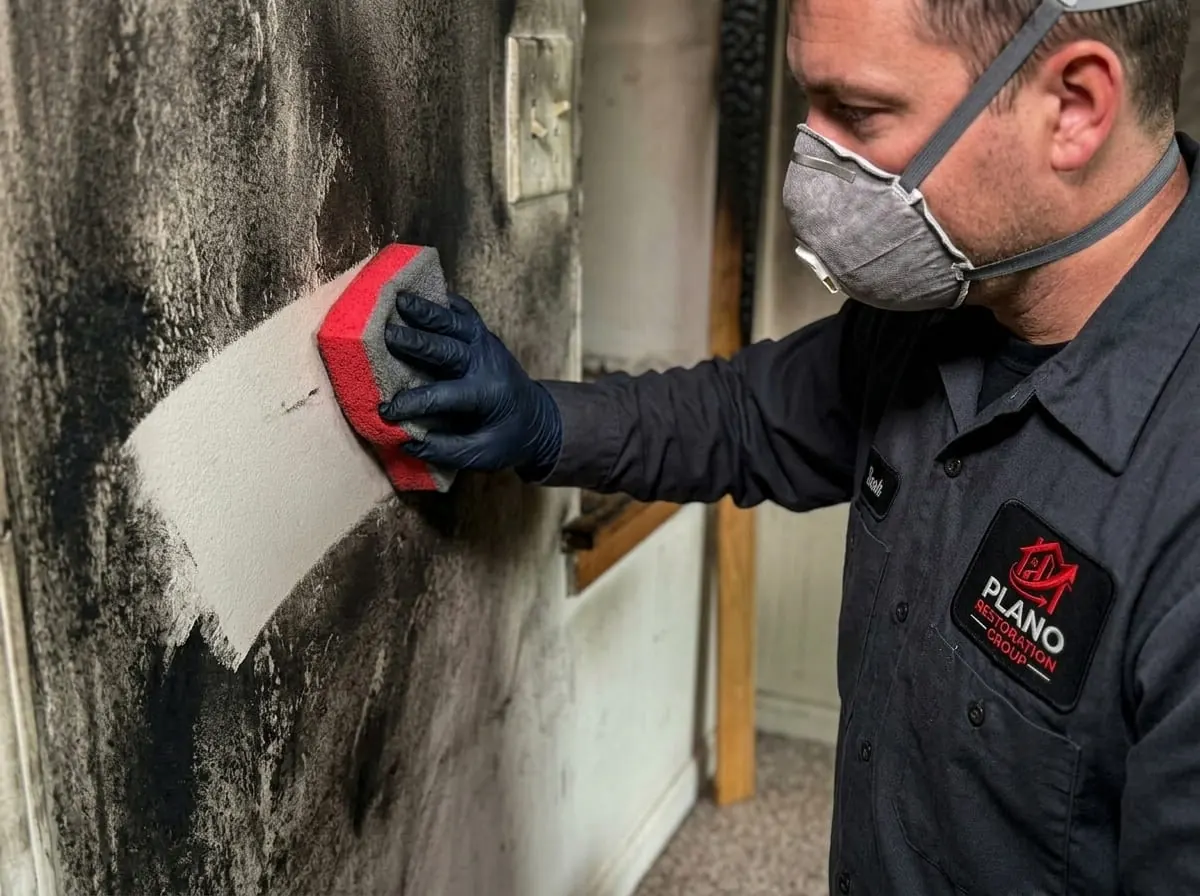
Soot, the black residue left behind by smoke, is acidic. That acidity means it doesn't just sit inertly on surfaces, it actively continues to etch and discolor metal, glass, and other materials the longer it's left untreated. This is one reason a fast professional response matters even in rooms that look only lightly affected by smoke rather than direct fire.
Why Smoke Odor Is Harder to Remove Than It Looks
Smoke odor comes from microscopic particles that penetrate porous materials, drywall, insulation, carpet padding, upholstery, and even wood, rather than sitting on the surface. Surface cleaning or simply airing out a room often isn't enough to fully remove the odor, because the compounds have settled into the material itself. This is why smoke odor treatment typically involves specialized cleaning, sealing, and deodorization techniques rather than standard cleaning products.
Different Types of Smoke Leave Different Residue
Not all smoke behaves the same way. A fast-burning, high-heat fire (often from materials like paper or wood) tends to leave a dry, powdery residue that's somewhat easier to clean. A slow-burning, low-heat, smoldering fire (often from materials like synthetic upholstery or plastics) tends to produce a thick, sticky residue that smears and penetrates surfaces more deeply. Fires involving synthetic materials such as plastics can also leave a stronger, more persistent odor.
Why Both Need to Be Addressed Together
A complete fire damage response addresses fire damage, soot residue, and smoke odor as three related but distinct problems. Repairing the burned structure without properly treating soot and smoke odor throughout the rest of the home typically leaves residents dealing with lingering odor and gradually worsening residue damage long after the visible repairs are done.
Key Takeaways
- Fire damage is direct destruction from flames and heat, generally confined to the burn area
- Smoke damage travels well beyond the fire itself, often through hallways and HVAC systems
- Soot is acidic and continues damaging surfaces the longer it's left untreated
- Smoke odor penetrates porous materials and usually needs specialized treatment, not just airing out
- A complete restoration addresses fire, soot, and smoke odor together, not just the burned area